Most Popular Interior Design Styles in Singapore: A 2026 Trend Analysis
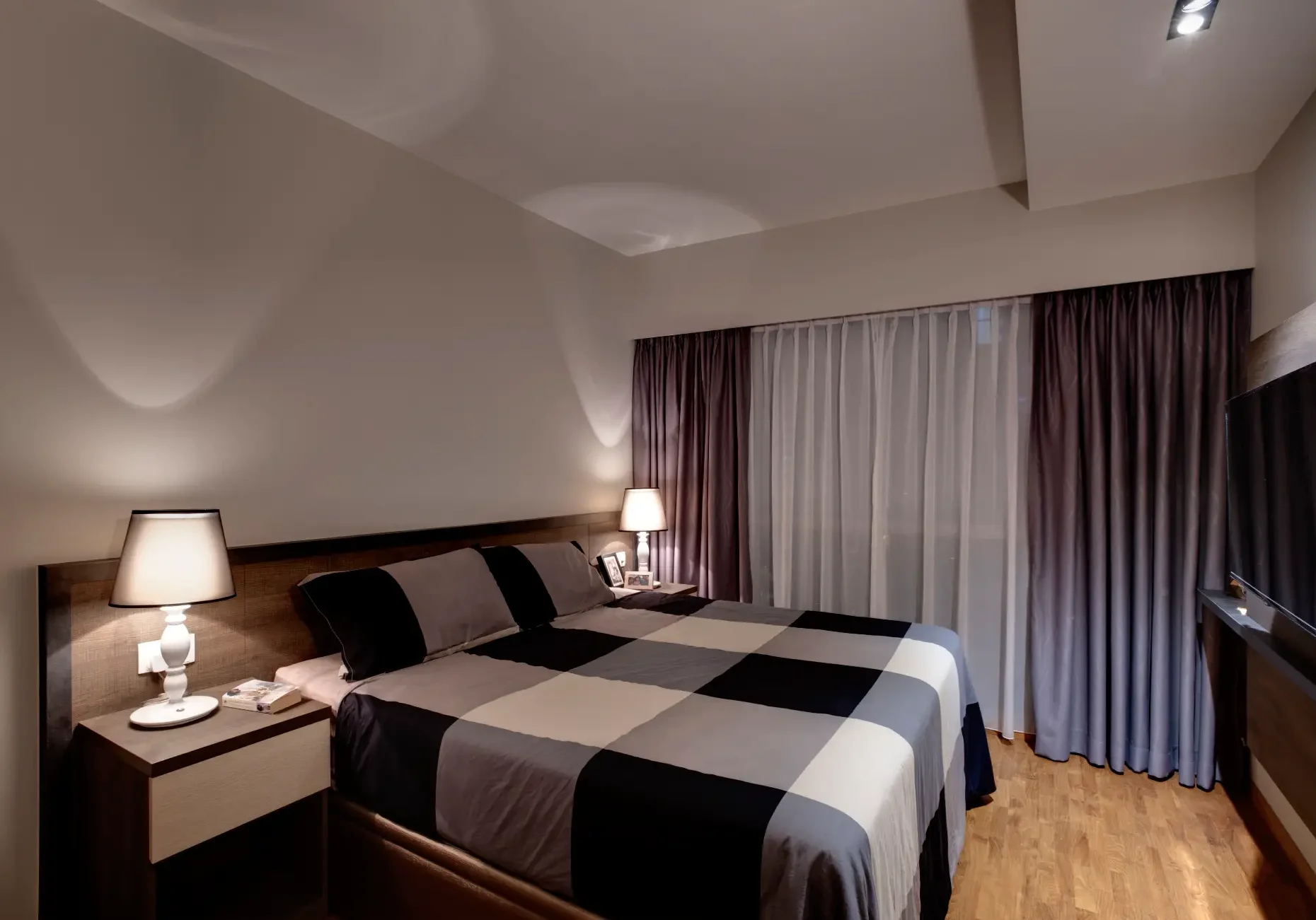
Interior design styles move in cycles, and Singapore’s are moving fast. The cool-grey minimalism that everyone was a fan of a few years ago has warmed up, Japanese and Nordic influences have merged, and homeowners are chasing calm vibes as much as looks.
This is less of a catalogue of every style that exists and more a read on the different interior design styles that are actually popular in Singapore homes in 2026: which looks are rising, which are steady, which are quietly fading, and how to pick the one that fits your space. If you want to know not just what the styles are but where they’re heading, start here.

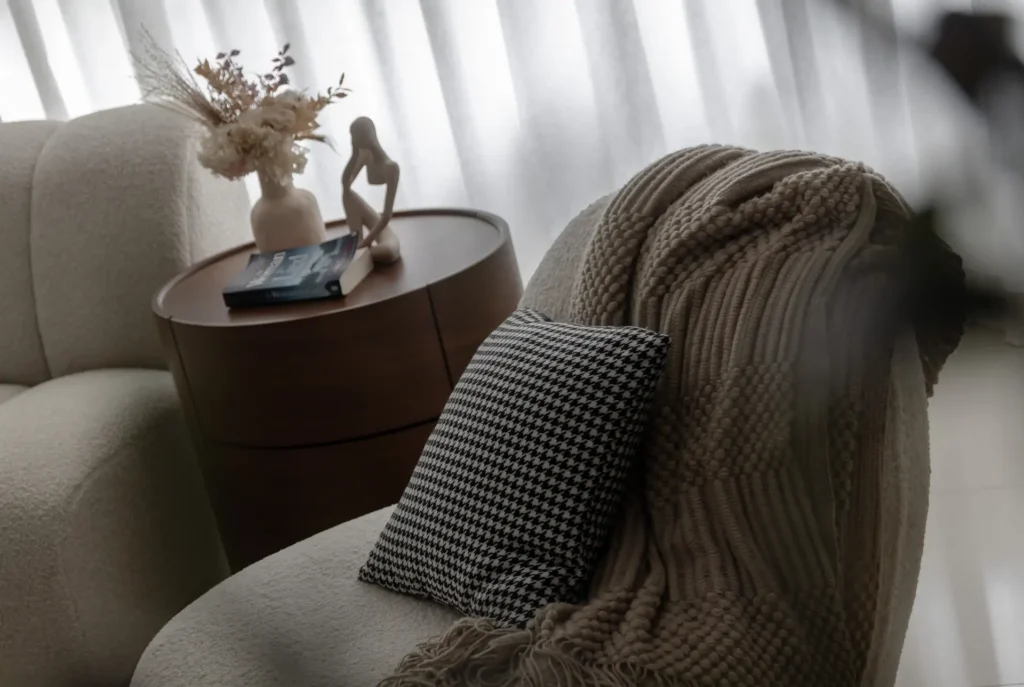
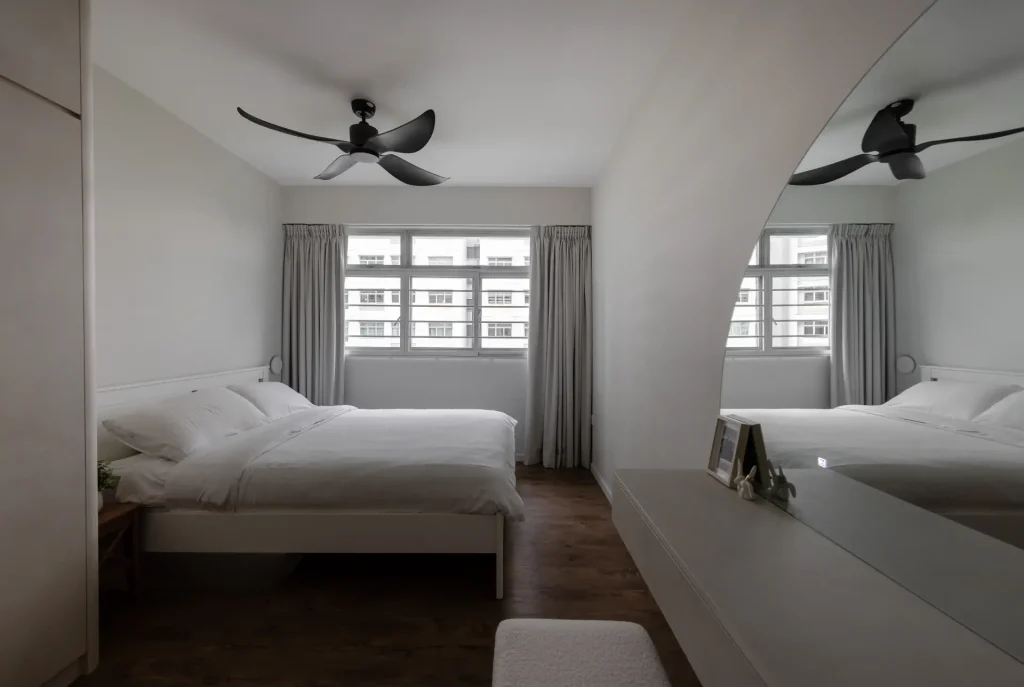
2026 Singapore Interior Design Styles Explained
How we read the 2026 trends: This guide looks at recurring patterns across Singapore residential projects, current design directions and the styles appearing most consistently across HDB and condo interiors.
“Rising” refers to styles showing stronger current momentum, while “steady” refers to looks that remain consistently popular rather than necessarily growing.
Warm Minimalism
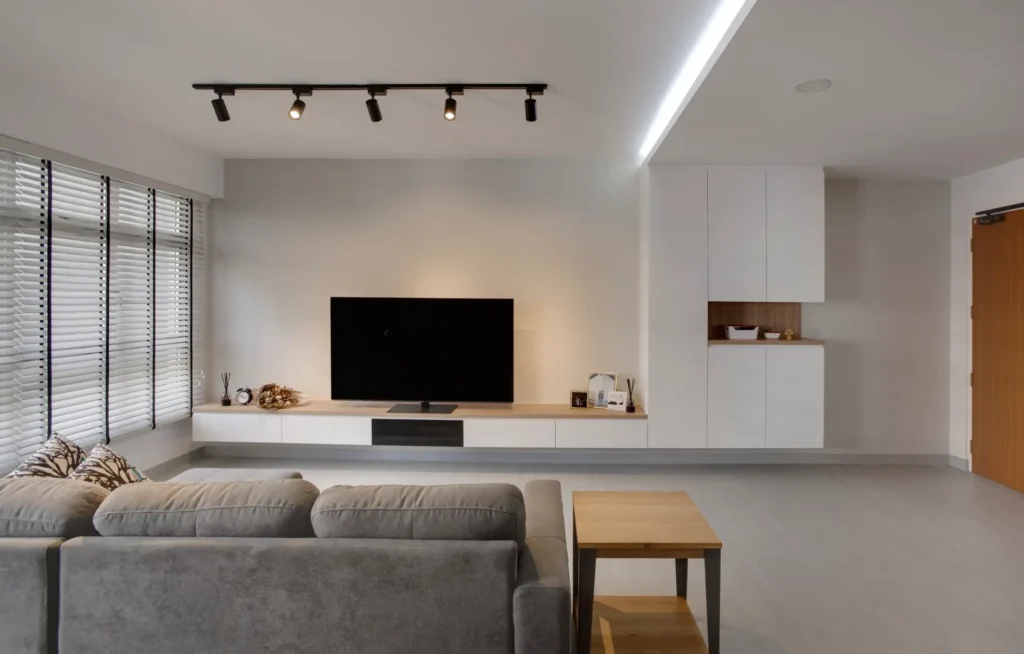
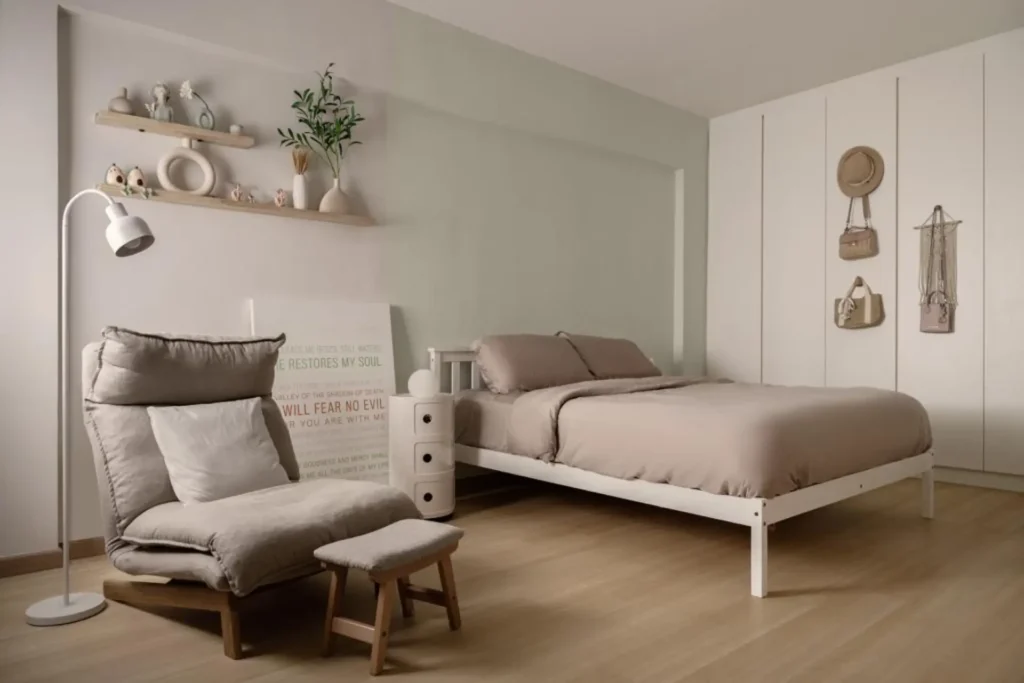
Minimalism never left interior design in Singapore, but it got warmer. The stark, cool-grey version has given way to warm minimalism. The interesting part is that both the restraint and clean lines are the same, but they have been softened with wood tones, greige and taupe palettes, and tactile finishes so the home feels calm rather than clinical.
It’s the closest thing to a default look in Singapore right now, precisely because it flatters compact flats and reads as effortless. This Mood Board’s Keep it Minimal home shows the warm, pared-back version. Expect it to keep rising as the base that other styles layer onto.
See how the black armrests prevent the entire flat from feeling clinical and plain. Although black is a dark colour, it still gives the eyes somewhere to rest. And the best part is, it doesn’t overwhelm the place.

Let me explain the style better with Minimalist Atmosphere. As you can see, we have the entire living room space wrapped in a light yet warm colour palette. And since minimalism is also about avoiding clutter as much as you can, we added built-in storage in the TV console and a hidden one in the sofa. Classic depiction of minimalism with a dash of warmth.
Japandi — The Defining Hybrid For Every Singaporean Home
Japandi, the mix of Japanese restraint and Scandinavian warmth, has been the defining Singapore look for several years and shows no signs of stopping any time soon. Think of a home with darker woods, matte black accents, low furniture and a genuine dislike of clutter; it gives it more grounding vibes than pure Scandinavian.
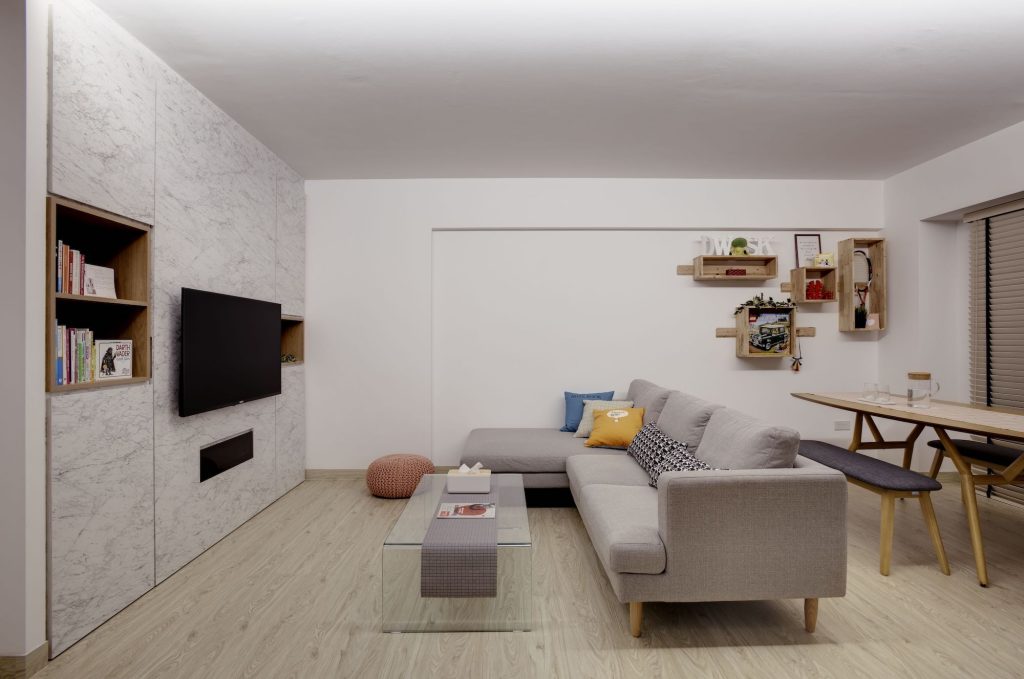
It rewards good craftsmanship, so it tends to be the style homeowners invest in rather than fake. This Mood Board’s Japanese Modernism apartment captures the restraint well. In the picture, you can see that we have reduced the number of decorative pieces and furniture in the living room; we have also left empty space by the sides of the sofa, and the transparent centre table makes the room seem bigger and also gives you somewhere to rest your coffee cup while you enjoy your TV series.
Scandinavian — The Reliable Favourite
Light wood, pale walls, soft textiles and a cosy, functional warmth keep Scandinavian design perennially popular, especially in HDB flats where its bright palette makes small spaces feel larger.
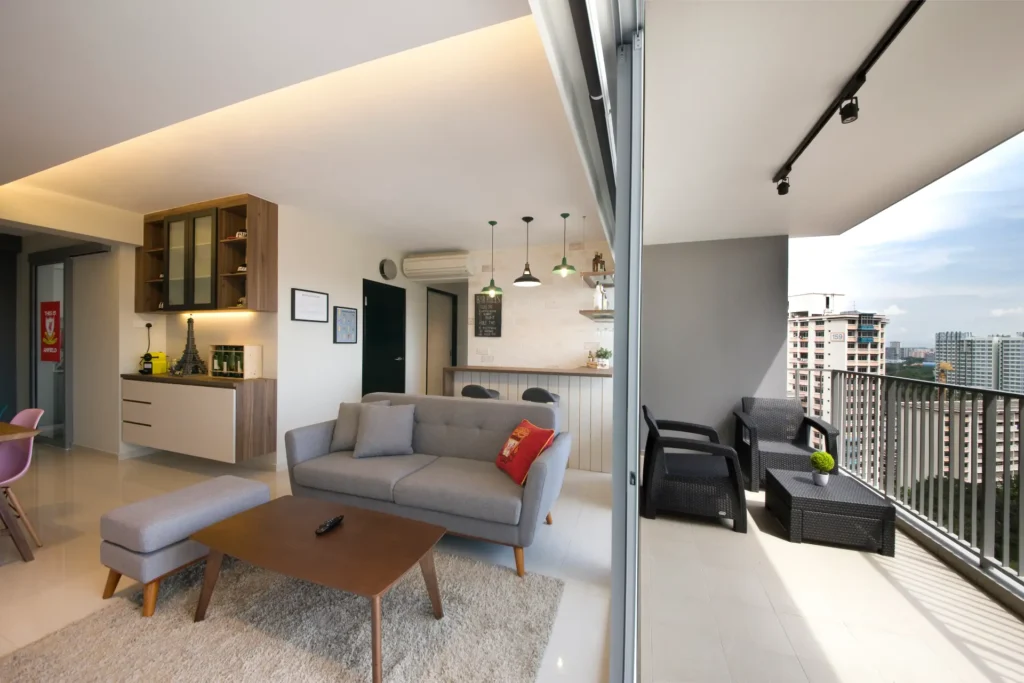
In Singapore, it’s usually warmed up a touch from the Nordic original to suit our light. It’s the accessible entry point to the whole warm-minimal-Japandi family, and This Mood Board’s Scandinavian Chic in Jurong West projects show the look in Singapore homes.
Muji-Style — Function-First Calm
If you have always hated flashy big furniture that takes up the entire house, this design is for you. Muji has one philosophy: Less is better. Every item has a purpose, and your house feels warm and inviting.
Muji-style interiors take cues from the Japanese retailer’s emphasis on simplicity, natural materials, modular storage and everyday functionality. Families gravitate to it for the practicality and the calm, and it overlaps heavily with warm minimalism and Scandinavian design, which keeps it firmly in favour with Singaporeans.
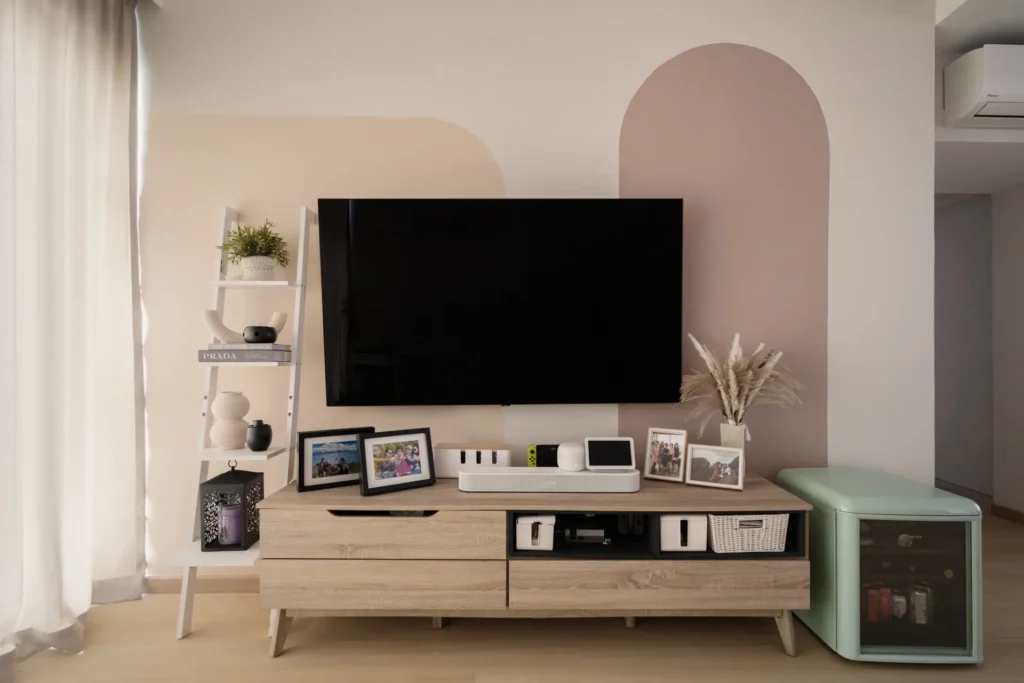
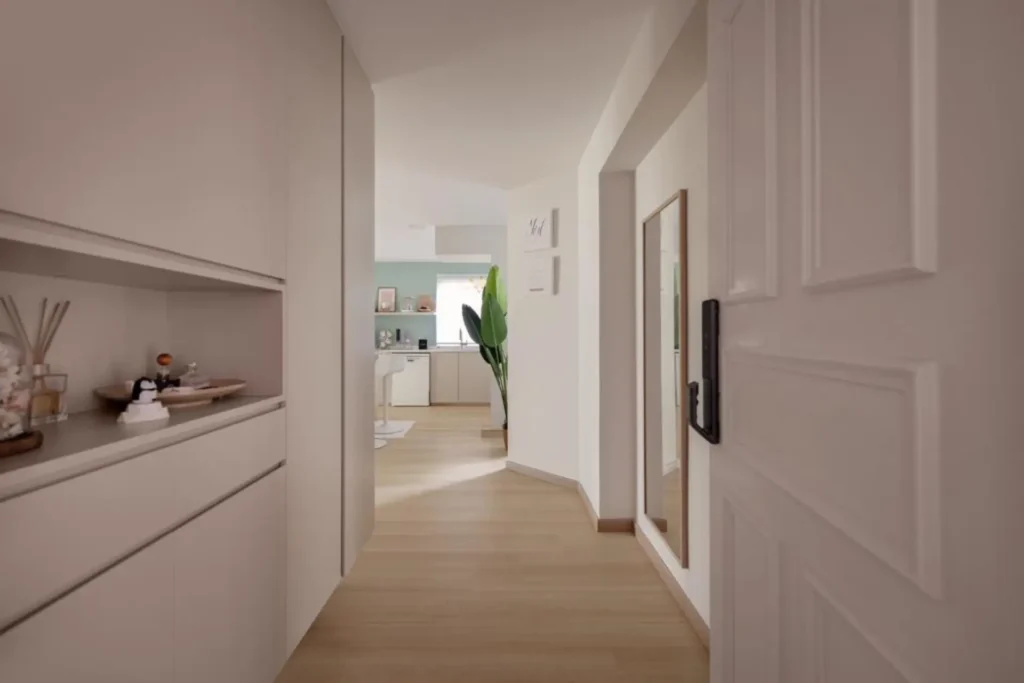
Look at how, in Sleek Nordic, the pink and turquoise give you the inviting part. The corridor that was left empty on purpose helps make the house feel bigger without tearing down any walls. The mirrors’ reflective work also creates more visual openness.
Modern Luxury — Aspirational Restraint
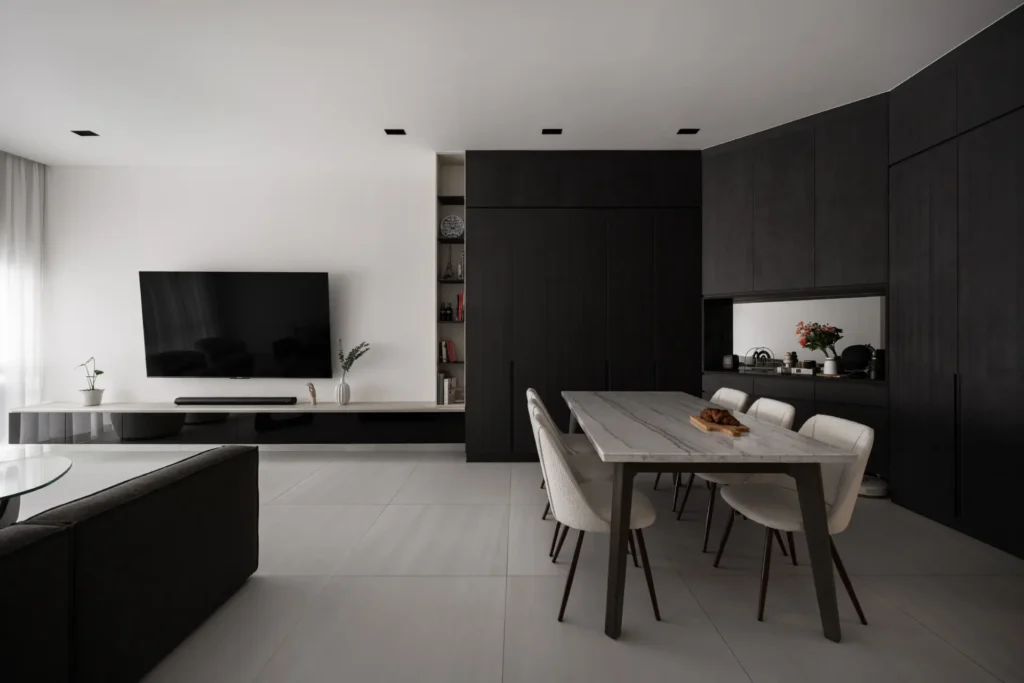
At the condo and larger-home end, modern luxury rules. Here you get a neutral base lifted by marble detailing, brushed metal and layered lighting, reading rich through quality and proportion rather than ornament.
It’s the antidote to the old, showy idea of luxury, and it’s rising as buyers move away from gloss towards quiet refinement. See This Mood Board’s darker-toned Black Modern Luxe for the modern luxe look. It gives you a break from traditional luxury looks by taking away the flash, golds, marbles and huge chandeliers. Also gives you the luxury wrapped in 21st-century modernity.
Wabi-Sabi
Wabi-sabi and earthy schemes, which find beauty in imperfect, handmade and natural materials like microcement and raw timber, are a small but growing niche for owners chasing calm over polish. Ageing is a natural process, and wabi-sabi embraces it fully.
Wabi-sabi interior design is a Japanese-rooted aesthetic that finds beauty in imperfection, simplicity, and the natural cycle of ageing. The design embraces uneven surfaces and cracks and finds beauty in them.
The Mood Board’s Earthy Modern home leans this way. Observe how we have amalgamated different shapes in the same room; the rectangular sofa and the curved chair are both unlike each other, yet they still fit together.

Peranakan-Modern and Resort — Local Character
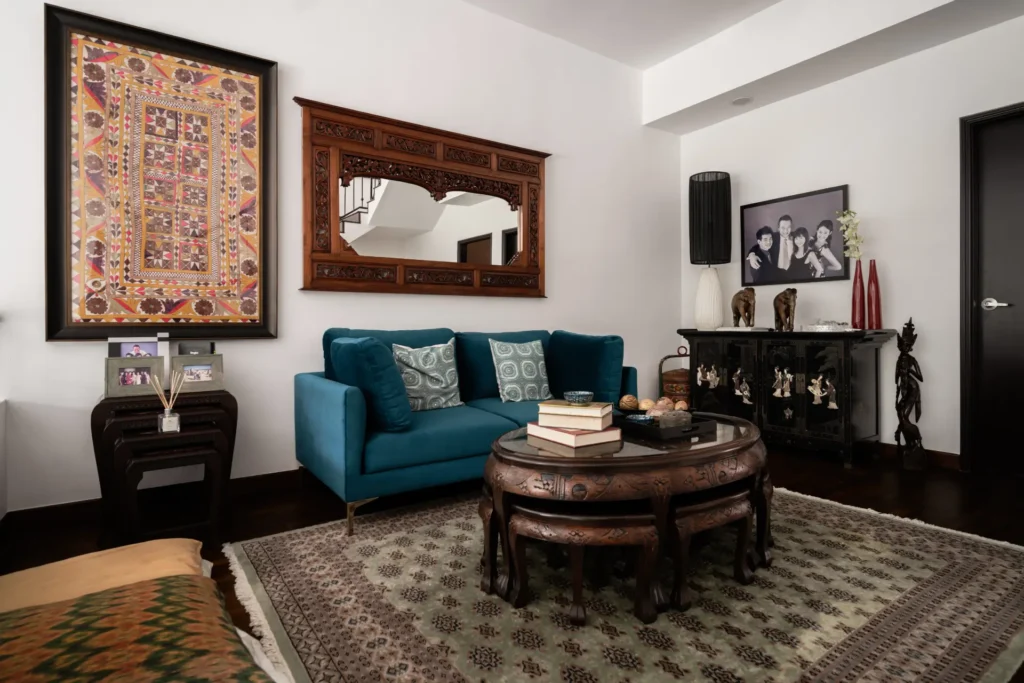
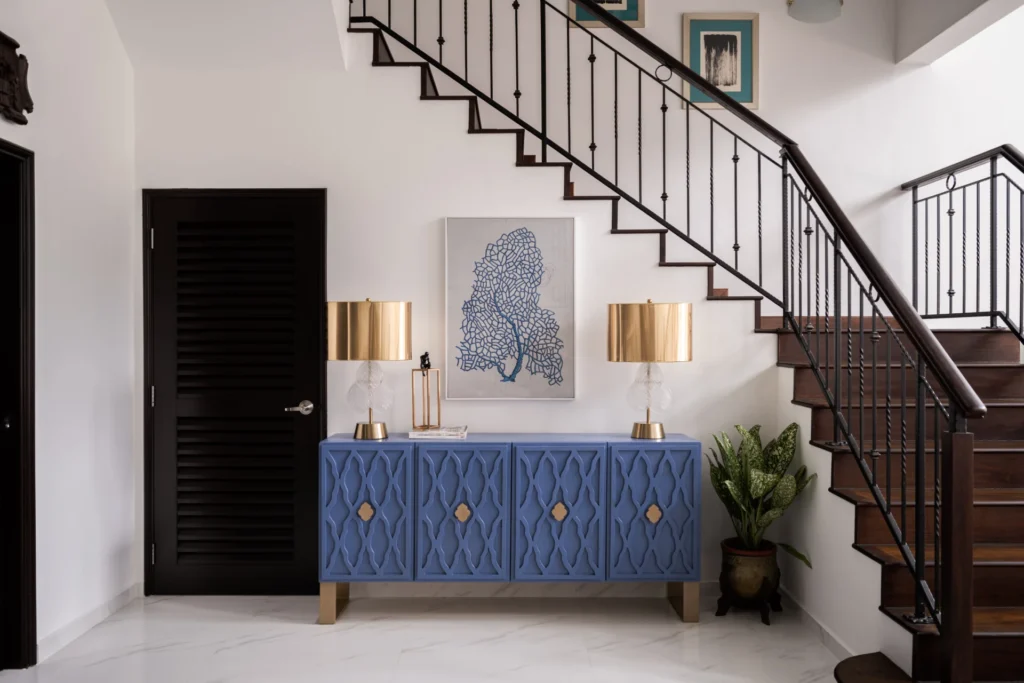
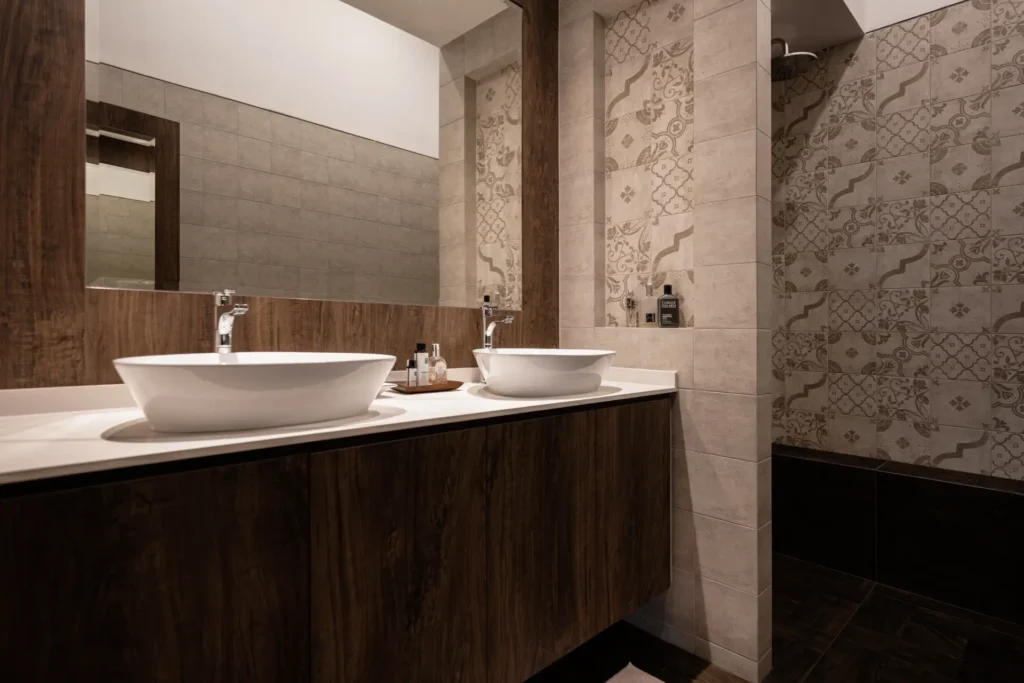
Two locally-rooted directions are gaining ground. Peranakan-modern dilutes heritage tiles, fretwork and jewel tones into a contemporary shell, giving a home Singaporean character without tipping into pastiche. Patterned tiles, timber details, decorative screens, arched forms and richer jewel tones are used, but edited for contemporary living.
Instead of recreating a traditional shophouse, the approach might pair a restrained neutral base with a statement encaustic-tile floor, a colourful backsplash, fluted timber or a single piece of heritage-inspired furniture. The result feels distinctly Singaporean without becoming overly themed.
Coastal Living projects show the look of a home in Singapore.
Best Interior Design Styles For Small Spaces
Not every interior design style works equally well in a small Singapore home. The key is less about finding a style labelled “small-space friendly” and more about controlling visual weight, clutter, storage and circulation.
Warm minimalism, Scandinavian, Muji and Japandi are particularly adaptable to compact HDB flats and studio condos because they combine restrained palettes, simple forms and practical storage.
For a studio or smaller condo, start with one consistent colour palette and make storage part of the architecture. Full-height cabinetry, concealed storage and multi-functional furniture are often more valuable than another decorative feature.
One piece of advice we give all our clients is to choose one area where you want to add an element, perhaps a textured wall, statement light or distinctive piece of furniture. Let one carry the personality, and let the rest of the room stay visually quiet.
Which Interior Design Style Is Best For A Small HDB?
For most small HDB flats, warm minimalism, Japandi, Scandinavian and Muji-inspired interiors are among the easiest styles to adapt because they prioritise simplicity, lightness and efficient storage. However, the best choice ultimately depends on the home’s natural light, layout, storage needs and how much visual detail you enjoy.
Modern Interior Design Styles
The terminology gets muddled easily. Modern interior design refers broadly to a 20th-century design movement built around simplicity, function and clean forms; mid-century modern is one later branch of it.
Contemporary interior design, by contrast, describes what feels current and therefore changes as tastes evolve.
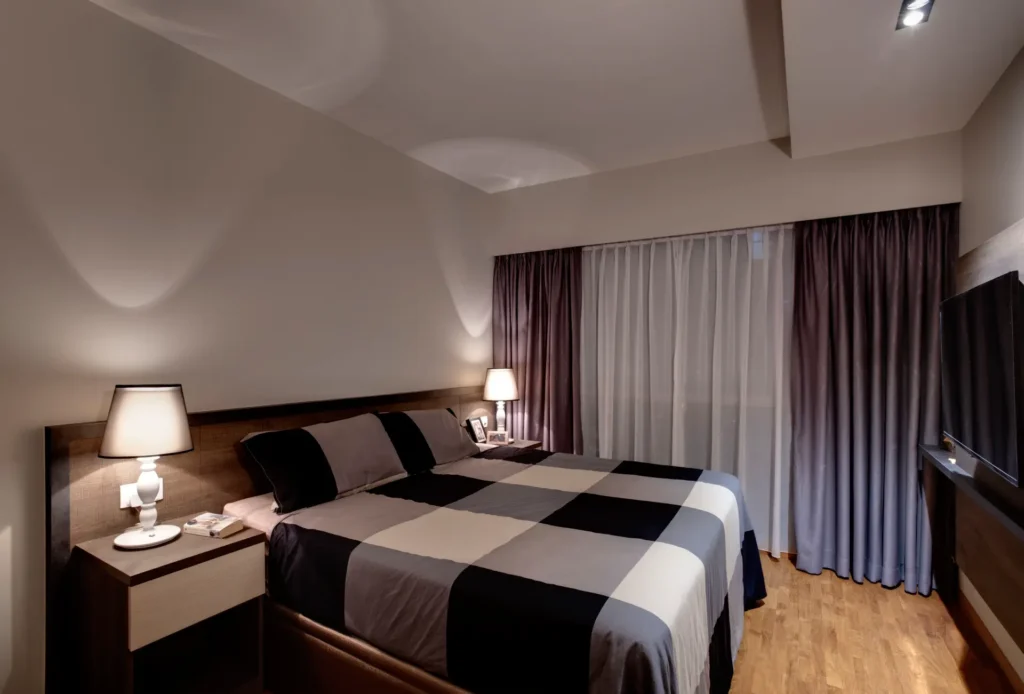
In Singapore renovation conversations, “modern” is often used loosely to describe interiors that are actually contemporary, warm-minimal or a blend of several styles. Think clean-lined furniture, neutral colours, concealed storage, simple lighting and a restrained material palette rather than a strict historical interpretation of modernism.
Knowing the difference matters when briefing an interior designer. Saying you want a “modern home” can mean almost anything. Saying you want a warm minimalist HDB interior with light oak, soft beige tones and concealed storage gives your designer a much clearer direction.
What Is The Difference Between Modern And Contemporary Interior Design?
The simplest distinction is this: modern design refers to a particular design movement, while contemporary design refers to what is current now. Modern interiors tend to follow established principles of clean forms and functional design; contemporary interiors can change with current colours, materials, furniture and architectural trends.
What is Fading, and Where Interior Design Styles are Heading in 2027
Interior design trends in Singapore in 2026 are becoming less about creating a dramatic “look” and more about how a home feels to live in. Cool-grey minimalism, stark all-white schemes and excessive use of high-gloss finishes are giving way to warmer neutrals, natural-looking materials and softer textures.
The same shift can be seen in modern luxury interiors. Instead of relying on ornate details, oversized features or obvious displays of wealth, luxury is increasingly expressed through material quality, proportion, lighting and craftsmanship. A well-detailed timber veneer, stone surface or sculptural light can make more impact than a room filled with decorative elements.
For Singapore homes, this also creates room for more personality.
The broader direction for 2027 is warmth, texture and calm: interiors that feel considered and personal rather than designed purely to make an impression in photographs.
How To Choose Your Interior Design Style In 2026
Start with the space, not the mood board. Before saving dozens of Pinterest images, consider how your home actually works.
Think about maintenance too: in a busy Singapore home, finishes that show fingerprints, dust, water marks, or everyday wear can become frustrating, so matte, softly textured, and easy-to-clean materials are often more practical for kitchens, bathrooms and high-traffic areas.
Finally, be selective about where you make a long-term commitment. Flooring, built-in wardrobes, kitchen cabinetry and bathroom finishes are expensive to replace, so keeping these relatively timeless gives you more flexibility, while furniture, lighting, artwork, curtains and accessories can introduce stronger trends without locking the entire home into one aesthetic.
Can You Mix Two Interior Design Styles?
Absolutely. In fact, many successful Singapore homes combine two or more styles. You might pair Japandi with warmer tropical materials, modern luxury with minimalist planning, or Scandinavian design with subtle resort influences.
The trick is to make the combination feel intentional. Keep one dominant colour palette, limit the number of competing materials and repeat key finishes throughout the home. When the palette and proportions are consistent, different influences can sit comfortably together without making the interior feel disjointed.
Ultimately, the best interior design style for your Singapore home is not necessarily the one that is trending hardest in 2026. It is the one that fits your space, lifestyle, maintenance tolerance and budget while leaving enough flexibility for the home to evolve with you.
Ready To Find Your Style?
Not sure which interior design style suits your HDB, condo or landed home? Talk to our expert designers about your space, lifestyle and renovation priorities, and let’s create a home that feels distinctly yours.
Frequently Asked Questions
What is the most popular interior design style in Singapore in 2026?
Warm minimalism and Japandi lead Singapore homes in 2026, with Scandinavian and Muji close behind, because all four suit compact flats and tropical light and deliver the calm, uncluttered feel homeowners want. Modern luxury leads at the condo and larger-home end of the market.
What is the difference between modern and contemporary interior design?
Modern refers to a specific 20th-century movement with defined mid-century roots, so it doesn’t change, while contemporary simply means whatever is current and shifts over time. Today’s contemporary reads as clean lines, neutral bases and mixed materials, so a room can be contemporary without being strictly modern.
Which interior design style is best for a small space in Singapore?
The lighter, storage-led styles — warm minimalism, Scandinavian, Muji and Japandi — work best in small Singapore homes because they maximise light and keep surfaces clear. Darker, heavier styles like full industrial can make a compact flat or studio feel smaller.
Can I mix two interior design styles in one home?
Yes, and most Singapore homes do. The key is to keep one disciplined palette across the home and let the styles blend through furniture and materials rather than competing. A Japandi shell with mid-century furniture, or warm minimalism with a Peranakan-tile accent, are common, successful pairings.
Which interior design styles are timeless in Singapore?
Warm minimalism, Scandinavian and modern contemporary tend to age best, because their neutral, restrained bases don’t tie you to a trend and can be restyled with furniture and textiles over time. Bolder, more themed looks can date faster, which is why many homeowners commit the renovation to a timeless shell and express personality through changeable layers.