Which Interior Design Style Increases Resale Value in Singapore? (The Honest Answer)
Before we begin, you need to understand that no interior design style automatically raises the value of your flat. It depends on the flat itself, including its size, year, and location. The right style can change how many buyers walk in, how likely they are to leave your work alone, and how fast you get a clean offer.
There’s another distinction that often gets lost in resale advice: valuation and selling price are not the same thing. So let’s separate the two, then look at what that actually means in homes we’ve designed and completed.
What is the Difference Between Valuation and Offer Price?
This is the part that often gets blurred in resale advice. The price a buyer agrees to pay and the valuation used for financing are not necessarily the same thing.
For an HDB resale flat, the valuation reflects the property and relevant market evidence, including comparable transactions and characteristics such as flat type, location, storey, and remaining lease.
HDB’s published resale statistics show transaction prices by town and flat type. Still, they do not record whether a home was renovated in Scandinavian, Japandi, industrial, or any other particular style.
This evidence matters because there is no published HDB dataset showing that one interior style adds a fixed premium to a flat’s value.
| What it measures | Does the style name show up? | |
| HDB valuation | Comparable caveats, storey, town, remaining lease | Barely. Condition registers; aesthetics don’t |
| Buyer’s offer | Emotion, plus what undoing your work would cost them | Yes, if they intend to keep it |
| Bank indication (condo) | Condition against comparable stock | Sometimes, as a renovated-or-original tick |
This is where the answer differs from some of the renovation advice you see online. You’ll often see claims that choosing a particular style can add S$50,000 or S$80,000 to a resale flat’s price.
Unless those figures are backed by transaction data comparing otherwise similar properties, always treat them as estimates rather than established resale premiums.
The more useful question is therefore not “Which style adds the most value?” but “Which renovation gives a buyer the fewest reasons to start subtracting from the price in their head?”
That is where design starts to matter.
What Singaporeans Are Actually Saving
The Straits Times reported on the similarity of local homes using data from the home-inspiration app Communa. According to its developers, minimalist style interior design accounted for 19% of saved posts, followed by Japandi and Scandinavian at 17% each, and mid-century modern at 14%.
However, there is one important thing worth noting here: these are saves, not sales. Nobody in that dataset paid a premium for a Japandi kitchen or a Scandinavian living room.
The numbers do show what people repeatedly choose as visual references. If you plan to sell your home later, you can use them to design it. Although they may not guarantee a higher resale value, they may still increase your odds.
Not because those styles have a proven price premium. A buyer who walks into a home that already feels close to what they would choose may see fewer things to repaint, replace or redesign. A buyer who dislikes the renovation may start mentally pricing those changes before making an offer.
That is the more realistic mechanism.
Style does not automatically add value. It can reduce the reasons a buyer refuses.
Style labels are marketing. Look underneath them
Here is something you can check rather than simply take our word for it.
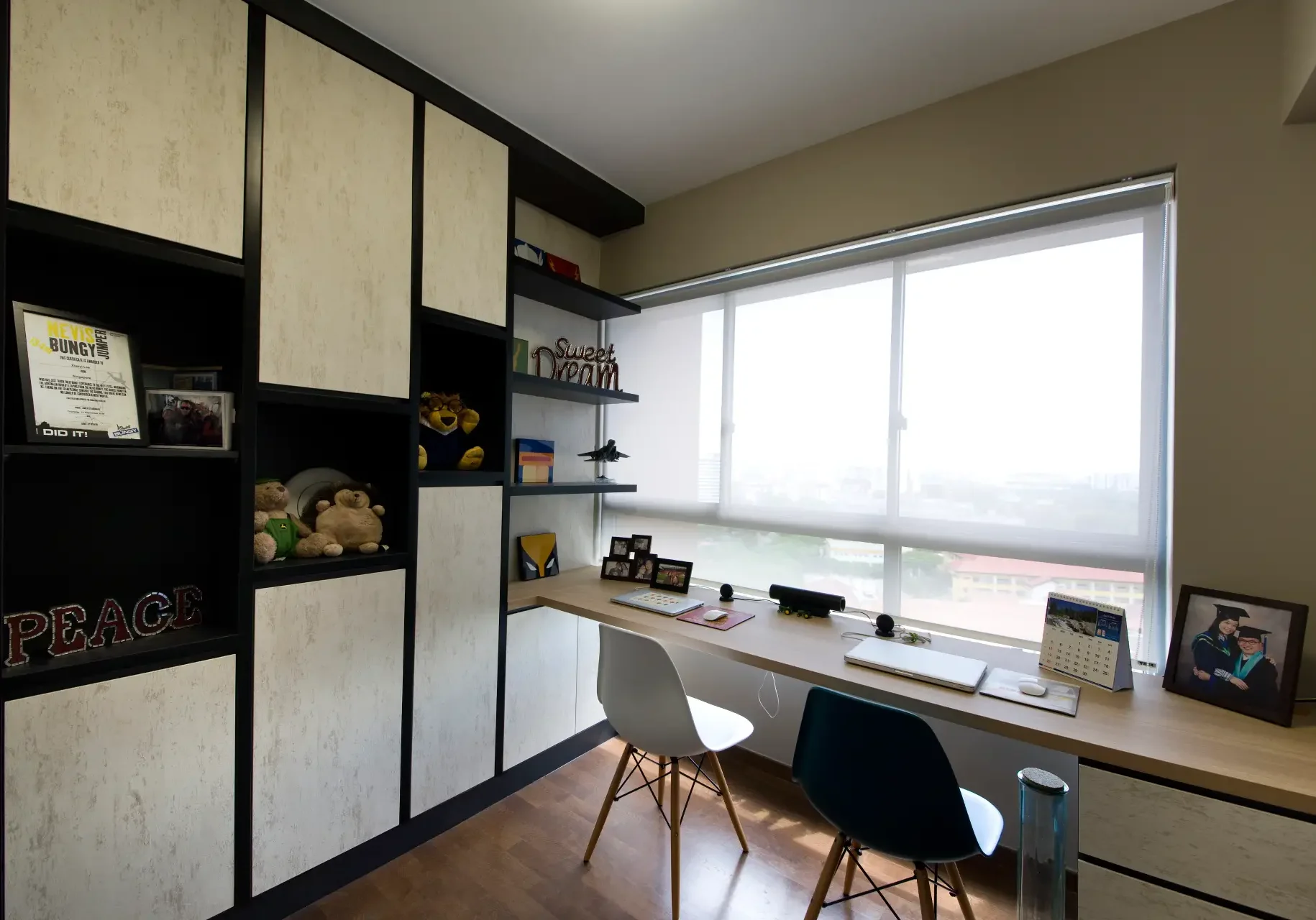
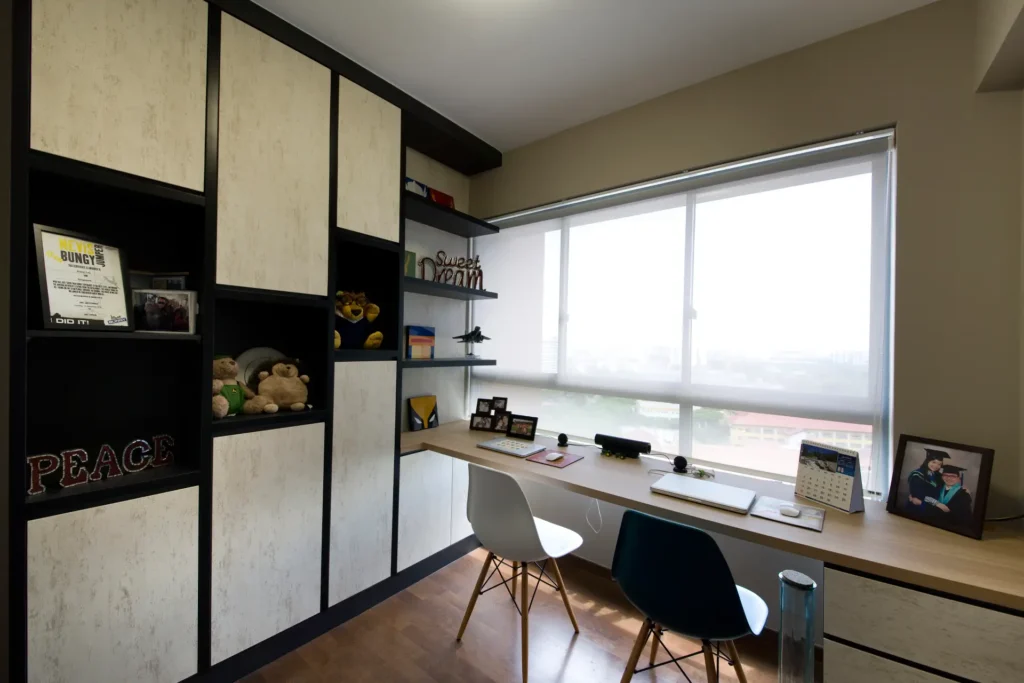
We have a project filed under Scandinavian Chic. Most style guides would make Nordic style interior design sound light, pale, and easy to live with. Look at the actual flat, though. The study has black-framed glass cabinetry, black track lighting running across the ceiling, and a dark feature wall behind the bed.
Now take the opposite example.
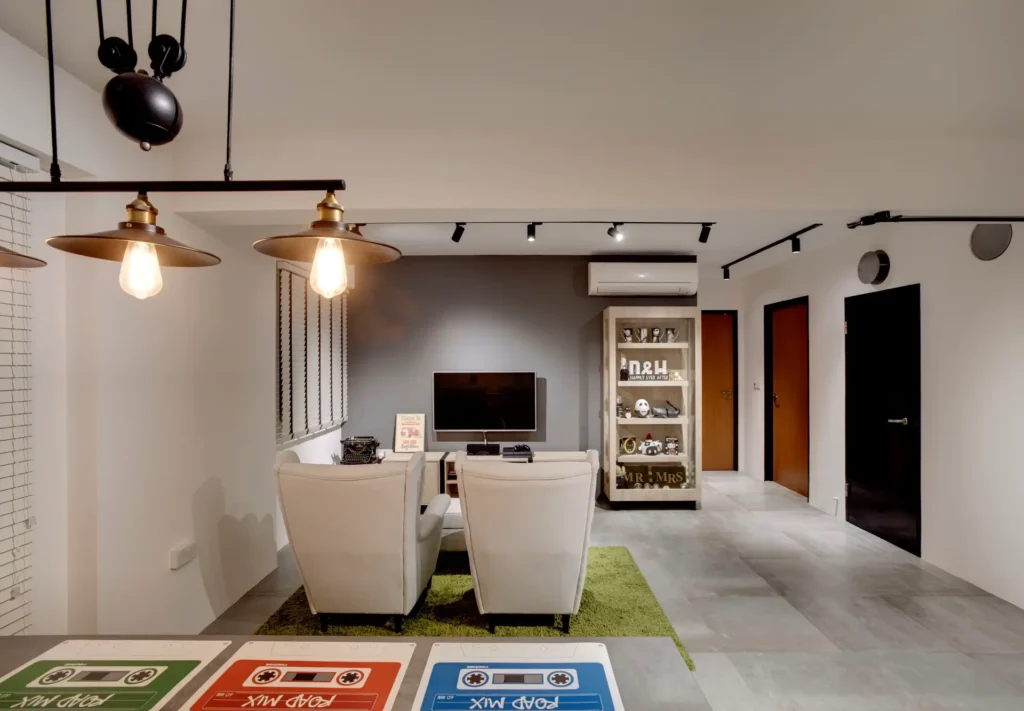
Another project is called Industrial Makeover; projects like this often get a bad reputation in resale advice. But look at the photographs. The walls are a soft cement grey, the blinds are timber slat, and the tall units are light oak. It is industrial the way a cardigan is knitwear. The label tells you something about the design direction; it does not tell you what the room actually feels like.
That is why style names are a poor shortcut when you are thinking about resale.
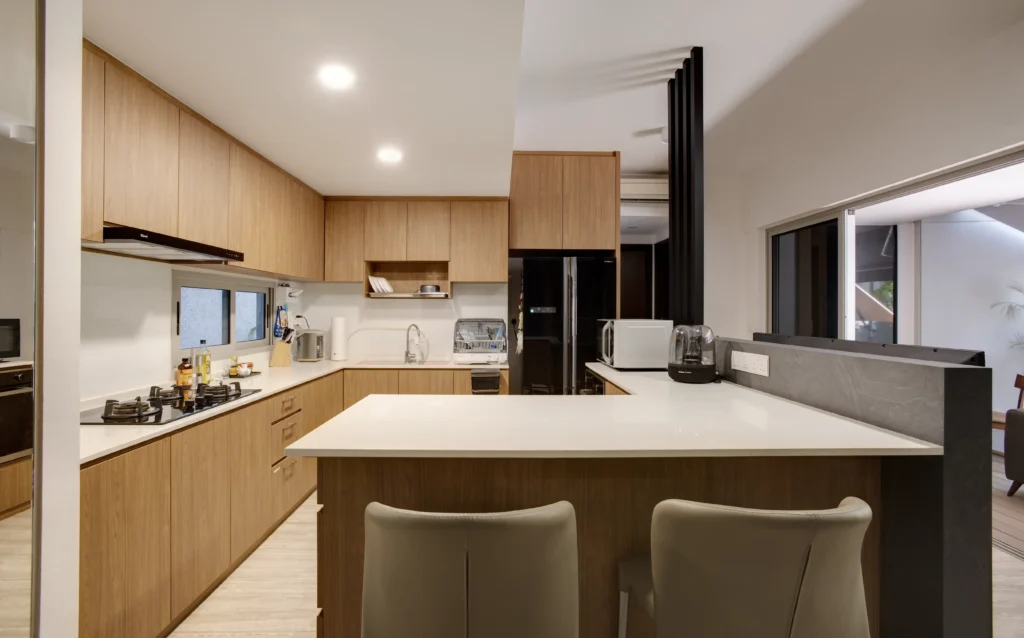
A buyer sees the room’s base first, not the design style that follows: the wall colour, flooring, cabinet fronts, worktops, tiles, and other finishes that take time and money to change. Those elements take up much more of the photograph than the project name.
Keep that base relatively light and warm, and there is more room for personality in the things a buyer can easily change. Make the fixed finishes very dark, highly specific, or heavily themed, and you are asking the next owner to imagine the renovation they would have to do.
Two flats labelled Japandi can therefore present very differently at resale. The same is true of two flats labelled industrial.
The label is the marketing. The fixed finishes are what the buyer actually walks into.
What Makes an Interior Easier to Resell?
Japandi is worth looking at more closely because people often buy into it as a mood: calm, warm, uncluttered, a little Japanese, a little Scandinavian. But the part that matters for resale is not the label. It is what gets built underneath it. Let me explain why.
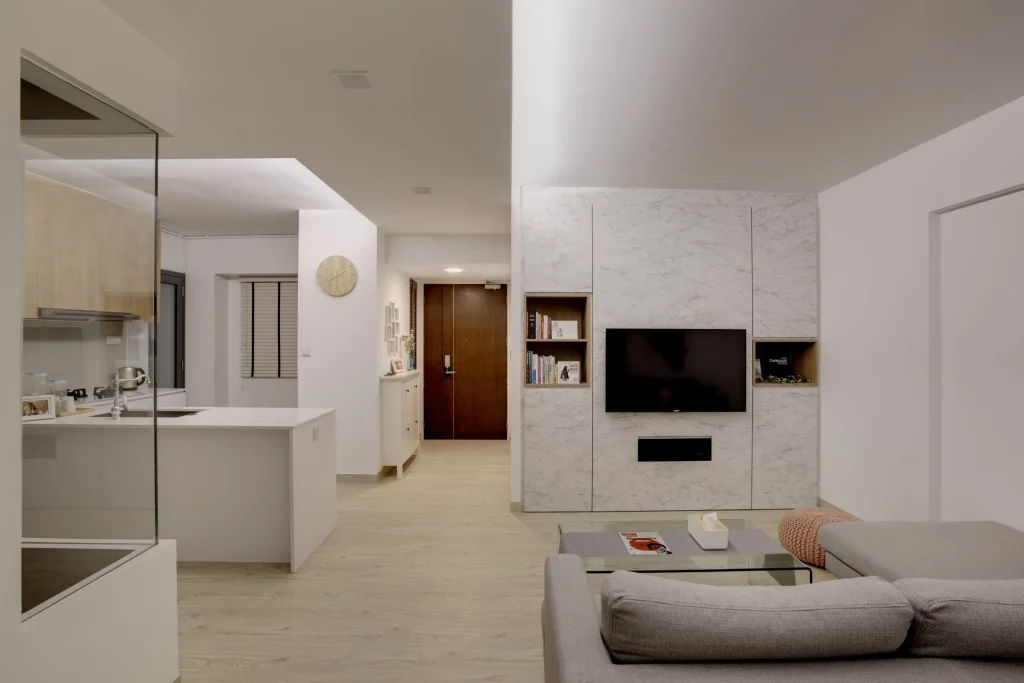
At our Cantonment Road project, the calm comes from three things you can see immediately in the photographs: a marble-look feature wall gives the television a single focal point instead of competing with several, pale timber flooring runs continuously through the space, and the joinery keeps most of the storage behind closed doors.
Those decisions are not dependent on someone loving the Japandi label. They can still work when the next owner has a different taste.
Another issue worth considering is cost.
On our published HDB renovation ranges, Scandinavian style interior design sits at S$30,000–S$55,000 and modern minimalist at S$35,000–S$60,000. Industrial style interior design starts at S$45,000 and goes up to S$80,000, while contemporary luxury starts at S$60,000 and can exceed S$100,000.
Those figures do not tell us which style will achieve a better resale price. They do show why you should consider resale before spending heavily on a highly specific look.
If you spend considerably more on a renovation that depends on one particular aesthetic, the next owner may not value the extra work the way you did. A higher renovation budget is not automatically a higher resale return.
Rooms Sell Flats. Labels Don’t
Take a dark industrial-style renovation: screed floors, black cabinetry, a dark feature wall, all beautifully executed.
Now imagine a buyer walking in with a young family who wants a brighter home. They aren’t thinking about how much the renovation cost. They are thinking about what they would have to change — the flooring, the kitchen fronts, the walls — before the flat feels like theirs.
That is the difference between spending money on a home and spending money on something a future buyer can easily live with.
A buyer may not care that the kitchen cost S$30,000 to build. They may care that they can move in without having to replace it.
This distinction matters because not every renovation dollar does the same job.
A functional kitchen, usable storage, sound waterproofing, and good lighting can improve how the flat works day to day. A very specific feature wall may simply make the room look more like the owner’s taste.
Both are legitimate reasons to renovate. They shouldn’t be treated as the same kind of investment.
In one of our projects, we used an open-concept plan with little open storage. Now, when the original owner decided to resell it, we noticed that new buyers consider boxing in some of that shelving.
Not because the original design was wrong. Open shelving simply comes with a maintenance burden: someone has to keep all those objects looking deliberate. A buyer looking at the same shelves may not see storage capacity. They may see the clutter their own belongings will create.
Put doors on the same joinery and the reading changes. It becomes storage.
That is the practical rule behind this section:
Build the home you want to live in. When you are ready to sell, make the fixed parts easy for someone else to live with.
Almost nobody says that out loud because it can sound as though the beautiful version was a mistake.
It wasn’t.
It was for you.
In 11 Sophia Residence, we added shelves that store and divide at once.
Your Sales Date Writes The Brief
The renovation you should choose depends partly on when you expect to sell.
If resale is two years away, you are making very different decisions from someone who expects to stay for another decade. The closer the sale, the less sense it makes to spend heavily on details that a future owner may want to replace.
| Your horizon | The brief |
| Selling within 24 months | Safe cluster only. Money goes to wet rooms, paint and defect clearance, not carpentry |
| Five to eight years, then selling | Contemporary or Scandinavian. Avoid whatever is currently peaking |
| Ten years or more | Design for your household. Resale is a constraint on the fixed decisions, not the brief |
That last row matters more than people think.
Most of the homes on our inspirations page are designed for people who are going to live in them for years, not prepare them for an imaginary buyer. That is the right priority. A family staying for a decade should get the home that works for them.
The resale discipline is simply to be selective about what becomes permanent. So if you know you are likely to sell soon, keep the expensive decisions broadly adaptable.
If you are staying for ten years, don’t spend ten years living in a showroom designed for someone you haven’t met yet.
Build the home you want.
Just know which parts you are making difficult for the next owner to change.
Planning A Renovation With Resale In Mind?
You don’t need to make your HDB flat look generic to keep it resale-friendly. The better approach is to know which decisions are worth spending on, which are personal choices, and which fixed finishes could become a problem later.
Talk to This Moodboard about your renovation plans. We can help you work through the layout, finishes, storage, and overall design with both everyday living and your future resale plans in mind.
Frequently Asked Questions
Which interior design style increases resale value in Singapore?
No interior design style is proven to automatically increase the valuation of an HDB flat. Valuation is based on the property and relevant market evidence rather than whether the renovation is Scandinavian, Japandi, industrial, or another style. For resale, a more neutral and broadly appealing design may make the flat easier for different buyers to imagine living in.
Does renovation increase HDB valuation?
Renovation spending does not automatically translate into a higher HDB valuation. You shouldn’t treat what you spend on a kitchen, flooring, or carpentry as something you can simply add to the property’s value. Renovation can still affect the buyer’s perception of the flat. A functional kitchen, presentable bathrooms, good storage, and well-maintained finishes can reduce the work a buyer expects to do after moving in.
Think of renovation as improving the home you are selling, rather than assuming you’ll recover every renovation dollar at resale.
Is Japandi good for resale?
Japandi style interior design can work well for resale when the underlying design is simple and adaptable, but the label itself does not create a resale premium.
What matters more is how the space is built. A clear focal point, continuous flooring, practical storage, and a relatively restrained palette can make the home easier for another owner to imagine living in.
Does industrial or dark luxury design hurt resale?
It can make the home more specific to a particular taste, particularly when dark cabinetry, dark walls, screed flooring or other strong finishes dominate the fixed surfaces.
But industrial design is not automatically difficult to resell. If you are staying for many years, there is nothing wrong with designing the home around your own preferences. If you expect to sell soon, it is worth being more cautious about expensive finishes that a future buyer may want to replace.
Should I renovate before selling my HDB flat?
Usually, renovate selectively rather than completely restyling the flat. Start with obvious defects and maintenance issues. Repainting tired walls, improving lighting, making the kitchen presentable, and addressing dated or damaged bathroom finishes can make the home easier to view without committing to a full renovation that the next owner may remove.
The goal is not to create a brand-new interior. It is to remove obvious reasons for a buyer to start mentally adding renovation costs to their offer.