Japandi Style vs Scandinavian Interior Design: Which Is Better for Small HDB Homes in Singapore?
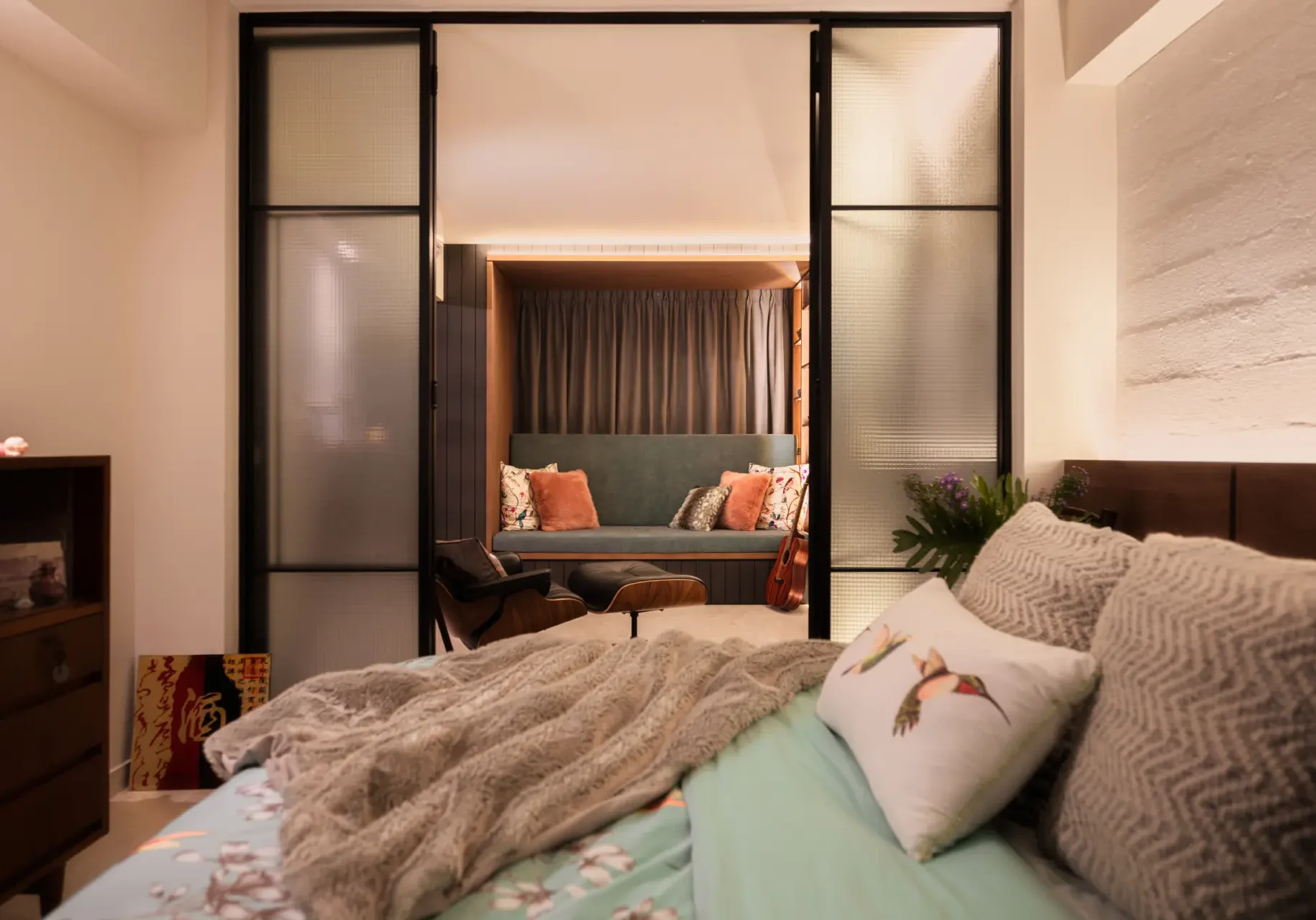
Walk into any newly renovated HDB flat in Singapore, and there’s a reasonable chance you’re standing in either a Japandi or a Scandinavian interior. The two styles have dominated Singapore home design for the better part of a decade, and for good reason:
They both prioritise calm, function, and a certain kind of visual order that compact homes desperately need.
But they are not the same thing. And for small HDB flats specifically, one tends to work better than the other.
So, let’s discuss how these are different.
Scandinavian Interior Design: Key Principles and Origins
Scandinavian interior design comes from the Nordic countries like Denmark, Sweden, Norway, and it’s built around a simple philosophy: functional beauty. Things should work well and look clean.
When you put it into practice, here is how it translates:
- A light, bright palette: Scandinavian Design often features white walls, pale wood (ash, birch, light oak), soft greys and warm off-whites. The style was partly developed in response to long, dark Nordic winters. The idea is to maximise the sense of light and warmth in the home.
- Hygge. The Danish concept of cosiness and convivial warmth. Soft textiles, candles, sheepskin throws, and a sense that the home is a welcoming retreat.
- Organic shapes. Scandi furniture leans more toward gentle curves and softened forms rather than straight angles.
- Plants and natural elements. Scandi interior design loves greenery — trailing pothos, fiddle-leaf figs, simple terracotta pots. Nature is brought in to compensate for months without it.
- Decorative but restrained. It’s not maximalist, but it’s also not bare. There’s room for a few meaningful objects on a shelf, a ceramic vase, a stack of books.
The overall feeling of the home becomes bright, warm, welcoming, and functional. Think of a very well-designed coffee shop you’d want to spend a Sunday morning in.
Here’s what Scandinavian design looks like in a real Singapore HDB flat:
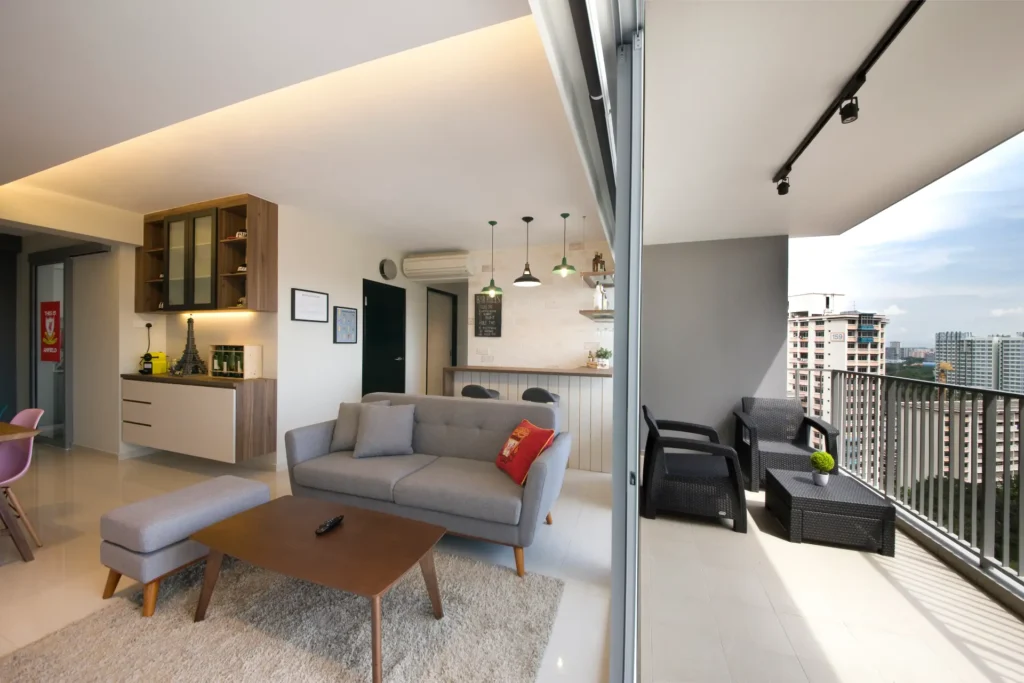
Scandinavian Chic in Jurong West — 138D Yuan Ching Road
The Yuan Ching Road flat is the actual depiction of Scandi at its most effective in a Singapore HDB context: pale wood finishes, a bright and open living area, and enough warmth in the textiles to stop it feeling clinical. Notice how the consistent light palette makes the space feel larger than it is.
And here’s the Sleek Nordic project, another strong Scandinavian example, this one at 172A Edgedale Plains:
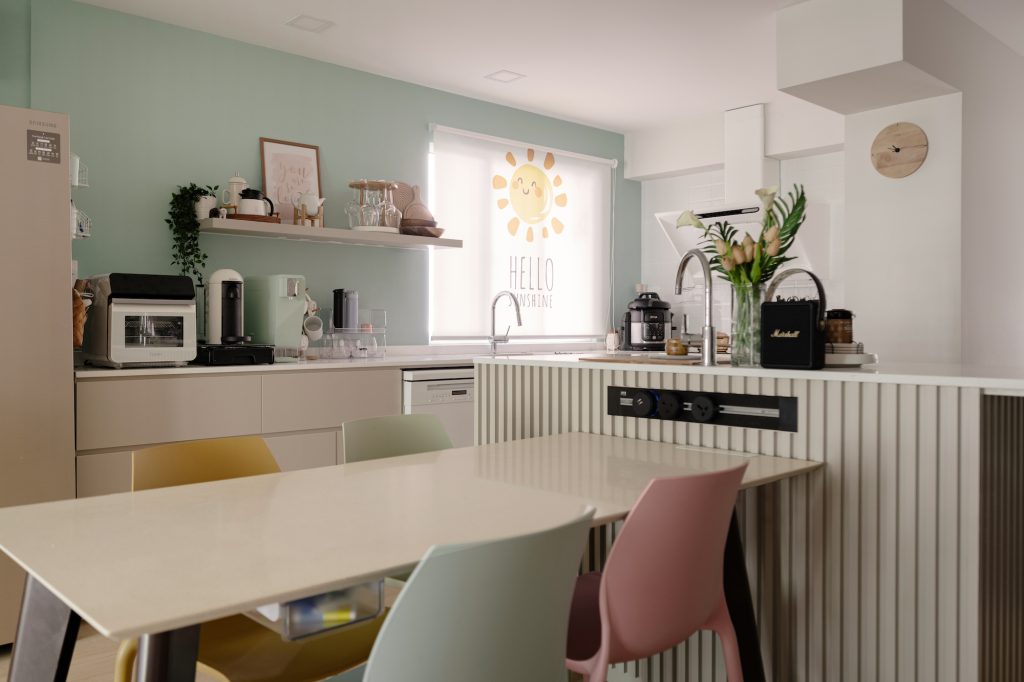
Sleek Nordic — 172A Edgedale Plains
Japandi Interior Design: A Fusion of Japanese and Scandinavian Principles
Japandi is a portmanteau, Japan plus Scandi, and it’s exactly that: a fusion of Japanese minimalism and Scandinavian warmth. It emerged as a defined style around 2016 and has since become a popular aesthetic in Singapore’s interior design.
The Japanese half brings:
- Wabi-sabi: A philosophy that accepts imperfection and finds beauty in natural materials, age, and simplicity.
- Ma (negative space): The Japanese design principle that empty space is as important as filled space.
- Restraint: Fewer objects, each one more considered. If it doesn’t serve a purpose, it doesn’t earn a place.
- Lower furniture profiles: Floor-level living, low beds, low sofas, a connection to the ground that gives rooms a grounded, settled feeling.
- Darker, earthier tones: Colours like walnut, dark oak, charcoal, slate, muted sage.
The Scandinavian half brings:
- Warmth and liveability (so it doesn’t end up feeling like a monastery)
- Natural materials such as wood, linen, and stone
- An emphasis on craftsmanship over decoration
The overall feeling of a Japandi home becomes intentional, calm, grounded, and quietly sophisticated. If Scandinavian is the coffee shop, Japandi is the meditation retreat, warmer and more lived-in than that sounds.
Here’s the Japanese Modernism project at 1G Cantonment Road, one of the cleanest expressions of Japandi principles you can see in Singapore:
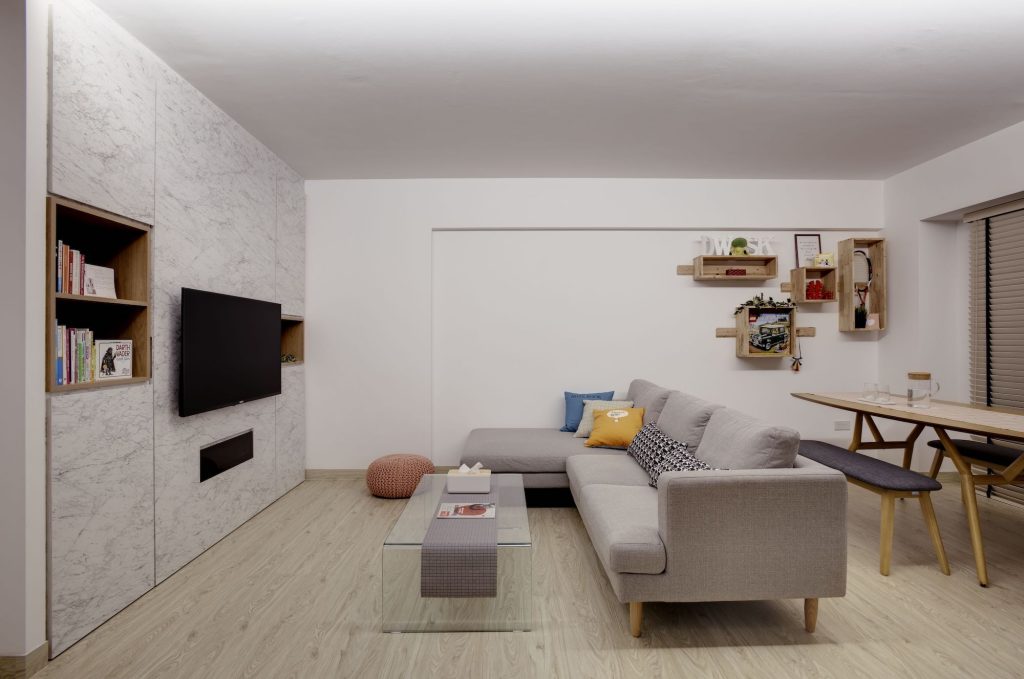
Japanese Modernism — 1G Cantonment Road
And here’s the Earthy Modern project at 20 Eunos Crescent — a Japandi interpretation with warmer, earthier tones:
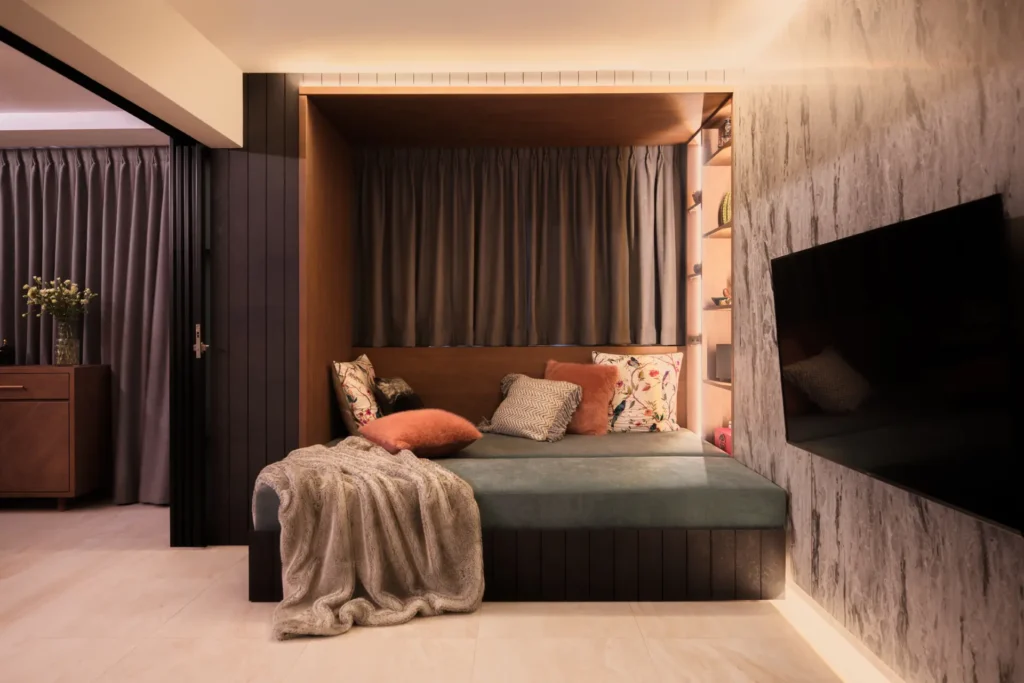
Earthy Modern — 20 Eunos Crescent
The contrast between these two Japandi projects illustrates the style’s range — the Cantonment project is darker and more disciplined; the Eunos project is warmer and more accessible. Both share the same underlying principle: every element earns its place.
Scandinavian vs Japandi Interior Design: Key Differences, Side by Side
| Features | Scandinavian | Japandi |
| Colour palette | Bright whites, light greys, pale wood |
Warmer neutrals, darker earthy tones, muted sage, charcoal
|
| Wood tones | light (ash, birch, light oak) | Darker (walnut, dark oak, bamboo) |
| Furniture profile | Mid-height, gentle curves | Low-profile, clean lines |
| Decorative elements | More — plants, textiles, objects | Fewer — intentional only |
| Negative space | Comfortable with some | Central to the aesthetic |
| Warmth | Hygge — textiles, candles | Quieter warmth through materials |
| Imperfection | Neat and tidy | Wabi-sabi (embraces it) |
| Budget | Easier to achieve at a lower cost | It can cost more for quality pieces |
How Each Style Works in a Small HDB Flat: Japandi vs Scandinavian
This is where the real answer lives.
Where Scandinavian has the edge:
If your HDB flat is on a lower floor, faces another block, or simply doesn’t get great natural light, Scandinavian design is the more forgiving choice. Its white-forward palette actively reflects light and makes rooms feel bigger and brighter than they are. A small bedroom in Scandi style genuinely feels airier than the same room in a darker palette.
Look at the bedroom in the Scandinavian Chic project — pale tones, light wood finishes, and a simple material language that makes the room feel calm and spacious without any tricks:
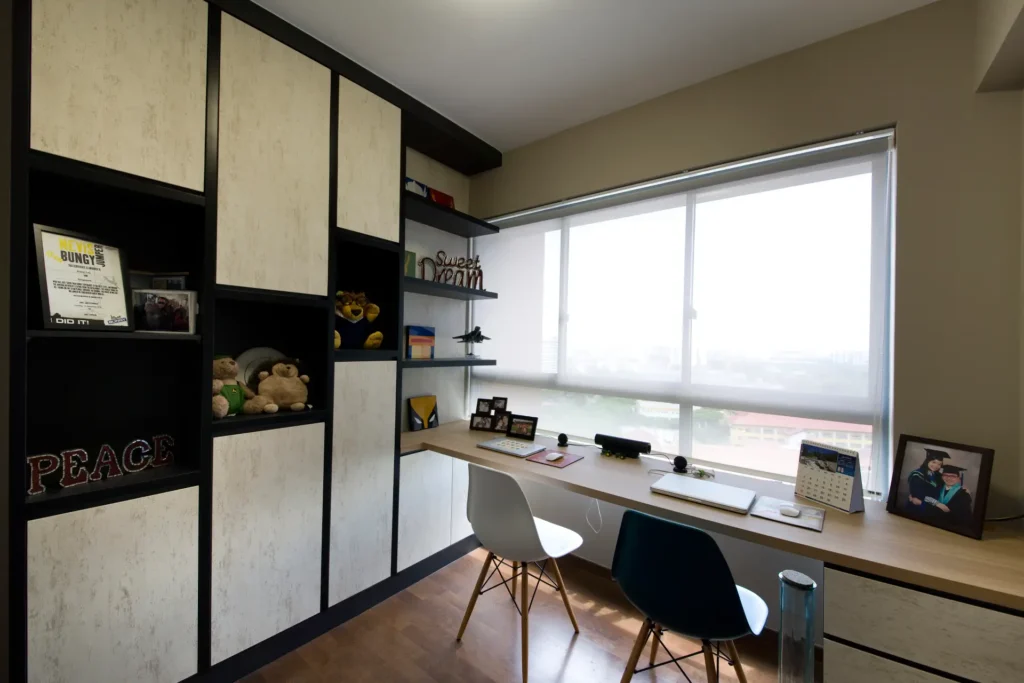
Scandinavian Chic in Jurong West — 138D Yuan Ching Road
It’s also more flexible for couples with different tastes. The warmth of Scandi textiles and the accessibility of the style mean you can adapt it gradually — add a plant here, a throw blanket there — without having to commit to a very specific material language from the start.
Where Japandi has the edge:
Japandi’s core philosophy — that nothing earns a place unless it serves a purpose — is exactly the discipline that small HDB flats need. The single most common design mistake in compact homes is over-decorating: too many accessories, too much furniture, too many competing visual elements. Japandi almost won’t let you do this. The aesthetic polices itself.
The Keep it Minimal project at 152 Bedok is the strongest example of this in practice. Every surface is intentional. There is no clutter because clutter was never given room to accumulate:
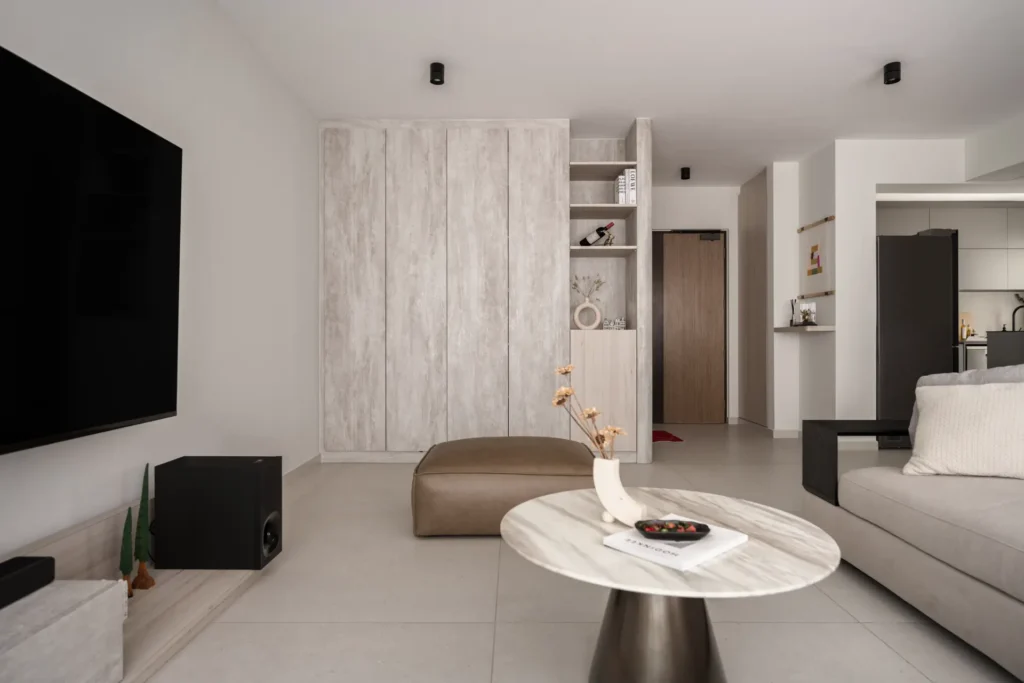
Low-profile Japandi furniture also makes ceilings feel higher. In a 2.6m HDB ceiling (standard in most blocks), a low sofa and low bed visually extend the sense of vertical space.
Japandi Style vs Scandinavian: Which Is Better for Small HDB Flats?
Japandi edges it — but with one important exception.
For most small HDB flats, Japandi’s restraint, its lower furniture profile, and its earthier palette that ages well in Singapore’s humidity all make it the stronger choice. Its discipline around negative space and purposeful objects directly addresses the spatial challenges of a compact home.
The exception: If your flat is dark — low floor, north-facing, limited windows — lean Scandinavian. The palette’s brightness is doing real spatial work under those conditions, and no amount of Japandi intentionality can make up for a flat that feels dim.
The best of both worlds: Most of Singapore’s best renovated HDB flats in 2026 aren’t strictly one or the other. They use Japandi’s material discipline and negative space principles with Scandi’s warmth and lightness. Light wood tones instead of dark, a slightly brighter palette, with Japandi’s restraint on objects and furniture profile. That blend is where the best results tend to live.
Choosing the One That Fits Your Flat
Japandi style vs Scandinavian interior design style — Both styles are good answers to the same question: how do you make a small home feel calm instead of cramped? There’s no wrong choice here. There’s just a better choice for your particular flat.
So before you pick, spend some time in the unit. Walk through it on a weekday afternoon and see how the light moves. Think about what you actually own and where it’ll need to go. If you live with someone, think about whether they’ll be okay with Japandi’s empty surfaces and bare shelves, or if they’re the kind of person who needs a few cushions and a throw to feel at home. None of these things show up on a moodboard, but they decide everything once you’re living in the space.
Most people who come to us at This Mood Board haven’t really chosen yet. They turn up with a few saved photos, a sense of what they’re drawn to, and a flat that needs a proper look. From there it’s a conversation — we go through the floor plan, talk about how the day actually runs in the home, and the right style usually shows itself. The aesthetic ends up being the easy part.
If you’re stuck between Japandi and Scandinavian (or anything else), don’t start with the styles. Start with the floor plan. Bring it in and we’ll figure out the rest together.
Bring your floor plan to This Mood Board.
Frequently Asked Questions
Is Japandi more expensive than Scandinavian to achieve?
It can be. Japandi’s emphasis on quality over quantity means the pieces you do choose need to be well-made — a cheap version of Japandi just looks bare, not considered. Scandinavian is more accessible at different price points because the warmth of textiles and plants compensates for simpler furniture. That said, both styles can be done thoughtfully on a range of budgets.
Can you mix Japandi and Scandinavian in the same flat?
Yes, and most Singapore homeowners do. The styles share enough DNA — natural materials, functional design, restrained palettes — that they blend naturally. The most common hybrid is Scandi’s light wood tones and brightness, with Japandi’s furniture profile and restraint on accessories.
Which style is better for a 3-room HDB flat?
Japandi, for its discipline. A 3-room flat at around 65 sqm cannot afford to accumulate decorative clutter, and Japandi’s philosophy actively discourages it. Its lower furniture profile also makes the most of lower ceiling heights.
Which lasts better over time?
Japandi’s earthier palette and natural materials tend to age better in Singapore’s conditions. White Scandinavian interiors are beautiful but show wear more visibly. If you’re renovating a flat you plan to live in for 8–10 years, Japandi’s material choices hold up better.
Is Japandi still relevant in 2026?
It’s moved past “trendy” into established. The styles that endure do so because they’re genuinely liveable, not just photogenic — and Japandi is both. It will look dated eventually, as every style does, but it has more longevity than most because its principles are rooted in function, not fashion.