Japandi Interior Design in Singapore: Features, Materials & Budget Guide (2026)
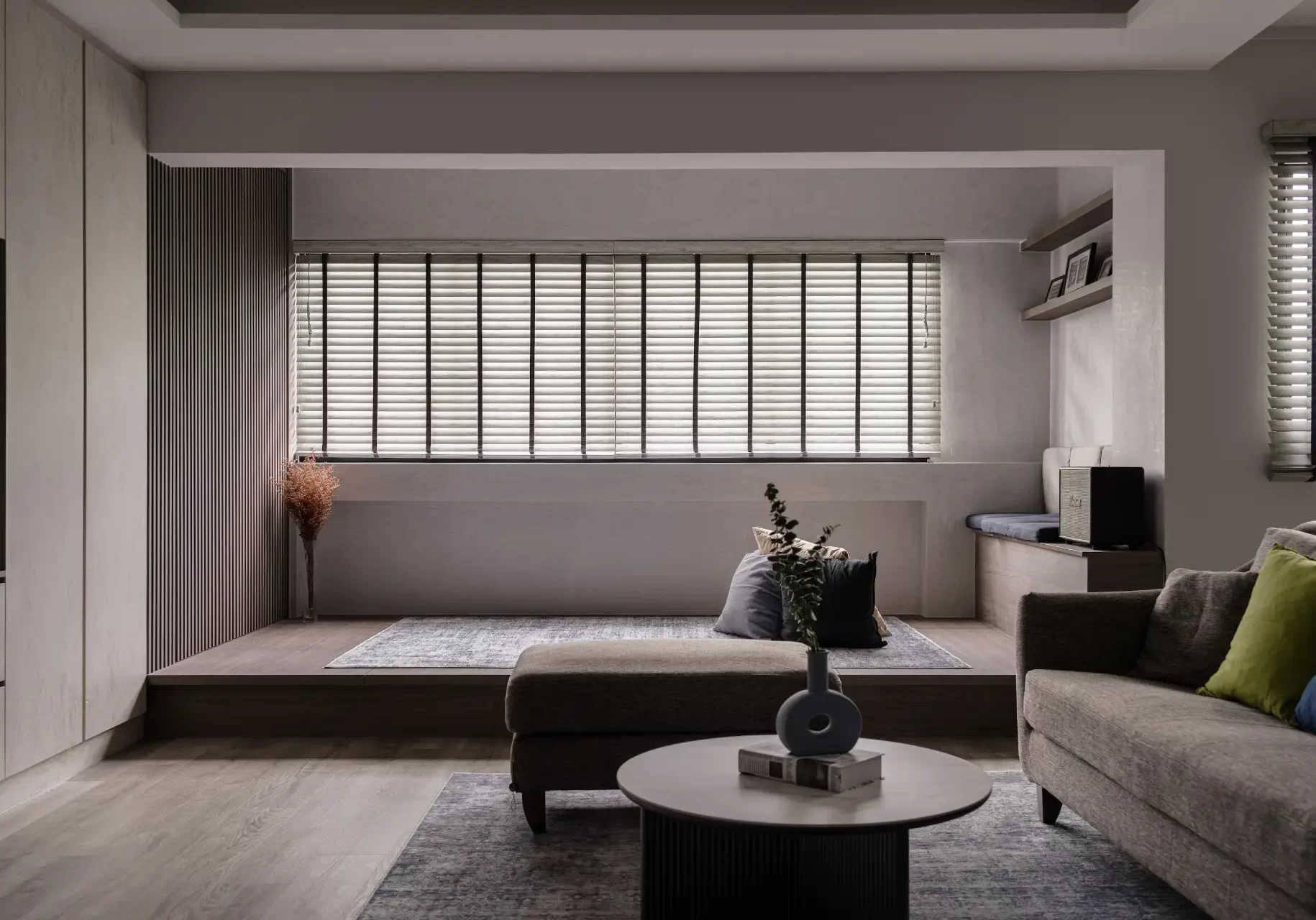
Japandi design looks simple on the surface, but many homeowners struggle to get it right, especially in compact Singapore homes. This blog will guide you on the features and elements of the Japandi interior design style with tips on how to incorporate it in your Singapore home.
What is Japandi Interior Design?
In Singaporean homes, Japandi isn’t just a trend that comes and goes. It’s a long-term lifestyle choice. It mixes Japanese minimalism with Scandinavian warmth. But that description alone doesn’t really explain why people are drawn to it. What sets Japandi apart is the quiet, uncluttered, and oddly calming even after a long day in a dense city like Singapore.
In Japandi homes in Singapore, you’ll often notice small details rather than bold statements. Whether it is sofas, TV consoles, or linen curtains, every bit of furniture feels intentional. In this blog, we will be discussing what sets Japandi apart, what materials to use, how much it costs and if it is the right decision for you.
Key Features of Japandi Interior Design
Japandi isn’t about complicating the interior of your home with bold colours and complicated furniture choices, but it is disciplined. It is about logically choosing designs. Let’s discuss some features that set Japandi apart from others:
- Neutral colour palette: Since white walls can make a home feel too sharp or clinical, Japandi uses beige, taupe, muted greens, and soft wood tones to make it feel warm.
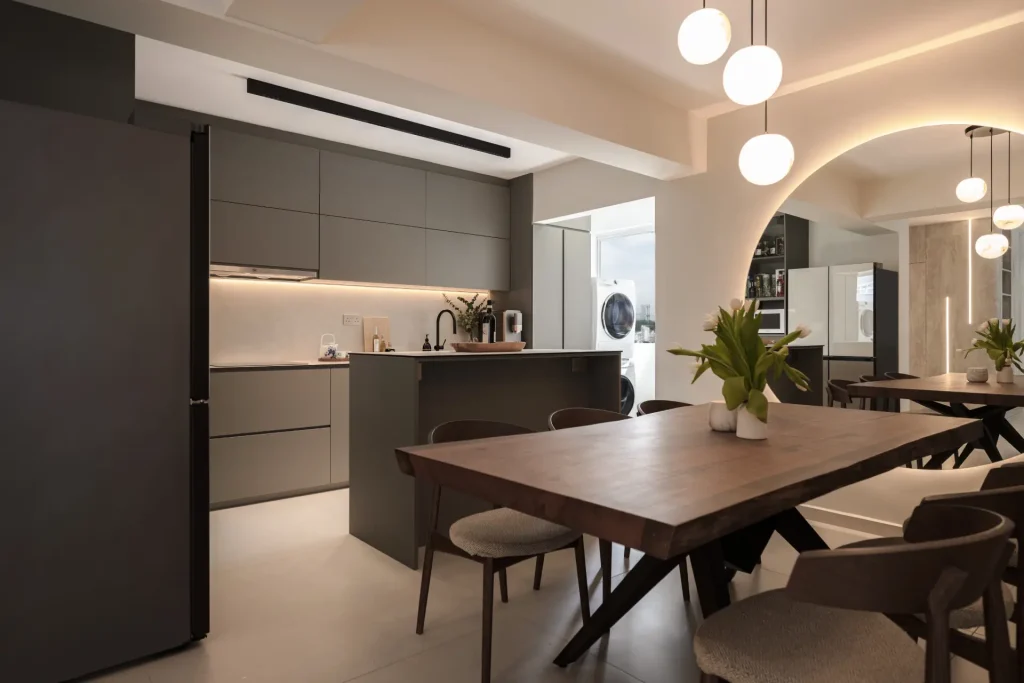
- Low furniture profiles: Use sofas and beds that feel grounded. In the living room, use coffee tables that don’t take up much space. Such furniture is especially useful in smaller HDB layouts.
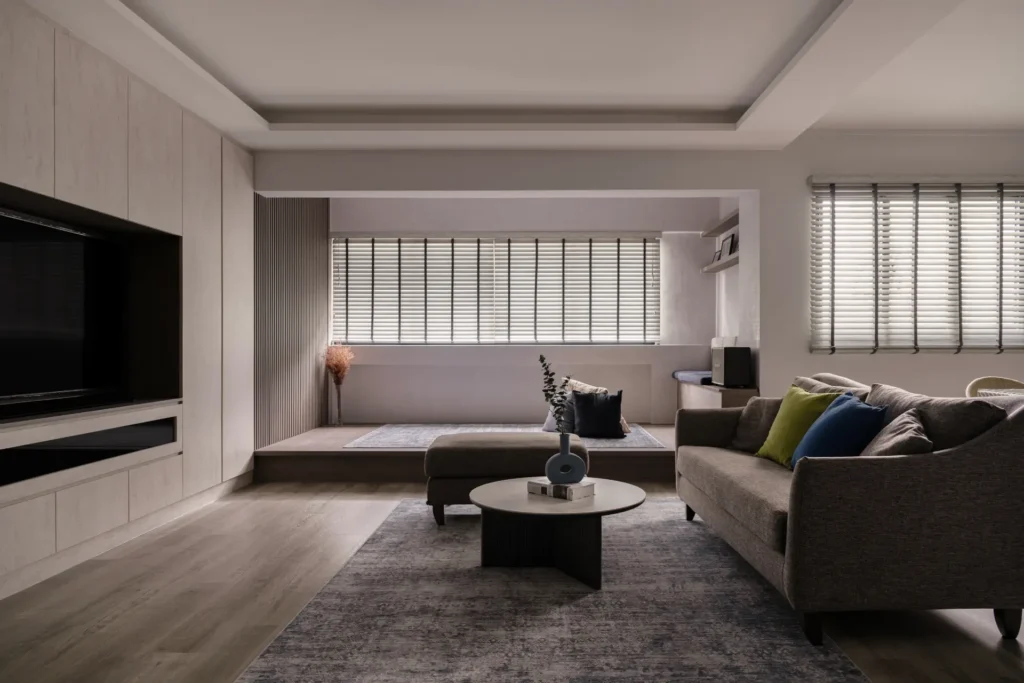
You can take inspiration from the minimal coffee table and sofa we used in 233 Pending Rd
- Natural materials everywhere: Materials play a huge role in your home. In your home, use materials such as Oak, ash wood, linen, rattan, ceramic, and stone.

- Controlled simplicity: Japandi is minimal, but not empty. There’s usually a sense that things have been edited down rather than stripped away completely.
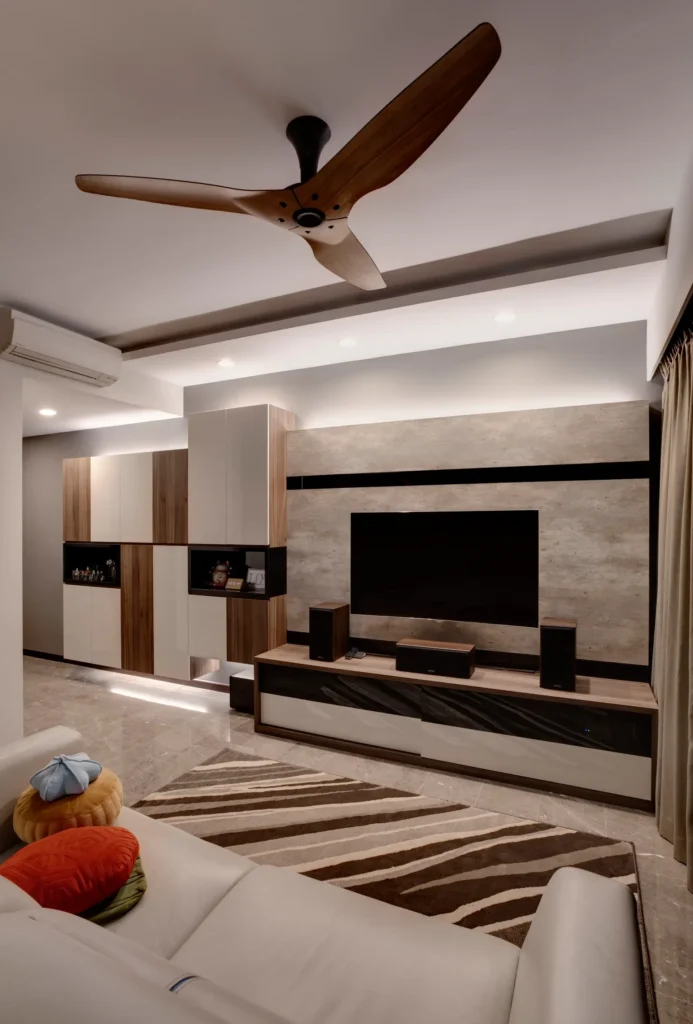
- Function first, always: In Japandi, storage isn’t decorative, it’s hidden. Open shelves exist, but they’re never overloaded.
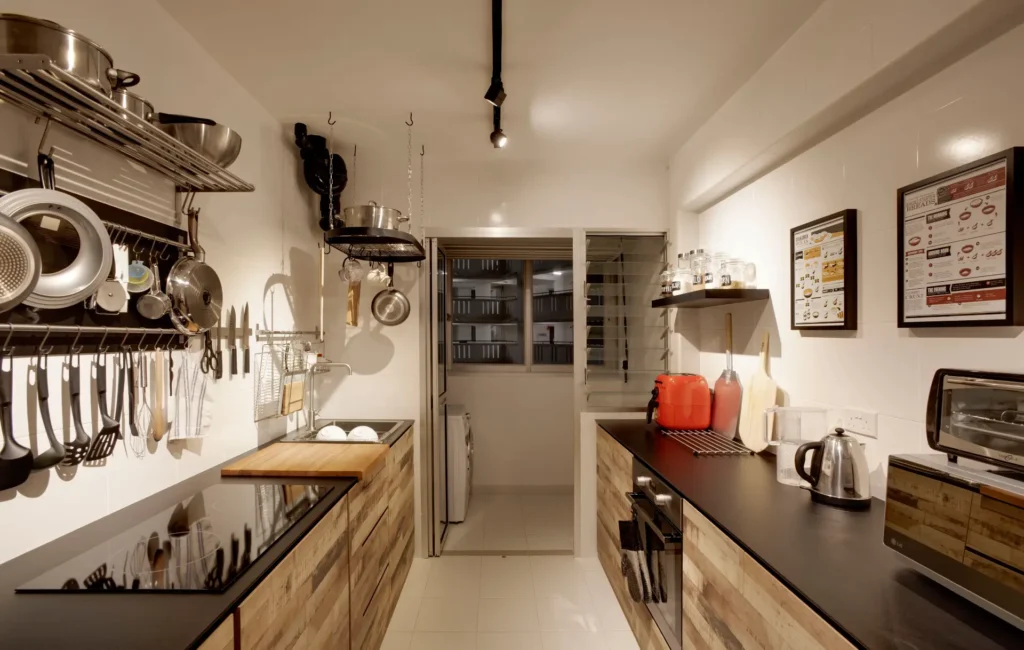
- Wabi-sabi influence: This is the part people often misunderstand. Imperfection isn’t forced, but it’s accepted. A slightly uneven texture or handmade ceramic is seen as character, not a flaw.
Japandi vs Scandinavian vs Minimalist (What’s the Difference?)
People often confuse these three styles, and on Pinterest, all three of the designs look exactly the same. Here’s what it looks like:
| Style | Materials | Colour Tones | Best For |
| Japandi | Wood, linen, stone | Warm neutrals | Balanced long-term living |
| Scandinavian | Light wood, cotton | White soft pastels | Open homes |
| Minimalist | Concrete and glass steel | Monochrome | People who like structured homes |
If you figure it out, Japandi begins to feel less “staged” over time.
Is Japandi a Good Fit for HDB Flats in Singapore?
In most cases, yes and quite a strong yes. Japandi works well in HDB flats because it doesn’t rely on size to look good. It relies on proportion and restraint.
Let’s take a 3-room HDB as an example; homes with minimal space are where Japandi shines the most. Low furniture and neutral tones help the space feel more spacious and less boxed in. A 4-room HDB, on the other hand, is the most balanced option. The flat gives enough space to layer textures without overcomplicating things.
You can also plan Japandi around a 5-room HDB, if you do it strategically. Choosing furniture that is small for the area, completely ignoring decorative pieces, can make the space feel too empty instead of calming.
One common mistake is under-furnishing larger units. Japandi isn’t about leaving rooms half empty—it’s about making what is there feel deliberate.
Materials That Define Japandi Interiors
This is where the style either works beautifully or falls apart completely. Here are a few materials that you should be using:
- Use Light oak or ash wood for flooring, cabinets, and furniture frames.
- Go for Linen curtains, it gives that slightly relaxed texture that makes a space feel softer.
- Use Rattan and bamboo in lighting, small chairs, or storage baskets.
- Gloss rarely fits in Japandi. Walls and cabinetry tend to stay flat and muted.
- Stone and ceramic accents in kitchen tops, bathroom basins, and decor pieces.
- A bit of contrast is fine, but too much and the warmth disappears.
How Much Does a Japandi Renovation Cost in Singapore?
There’s no fixed price, but Japandi tends to sit in the mid-range category depending on materials.
| Budget Tier | Estimated Cost | What it Includes |
| Basic | $25,000 – $40,000 | Simple carpentry, furniture with in-built storage and neutral repainting |
| Mid-Range | $40,000 – $70,000 | Custom carpentry, oak veneer, better fixtures, soft furnishing upgrades |
| Premium | $70,000+ | Solid wood elements, full custom work, stone features, designer lighting |
What Are the Pros and Cons of Japandi Design?
Japandi only really works when the lifestyle matches the design. Without that, it can feel a bit forced. Having a look at the Pros and Cons can help you make a smarter choice:
| Pros | Cons |
| Japandi is a timeless design, so you don’t have to worry about renewing every two years when a new design comes up. | The design can sometimes feel unfinished |
| It makes the home feel more open | It requires a lot of consistency to maintain |
| Materials used in Japandi work great in the Singaporean weather. | Getting premium materials can be expensive |
| Japandi offers great resale value | Not a smart choice if you like to update your home interior |
Who Does Japandi Actually Suit?
This style tends to suit people who prefer stability over constant change. It works well if you:
- Prefer quiet, uncluttered homes
- Lean towards natural materials instead of glossy finishes
- Don’t enjoy visual noise or heavy decoration
- Are renovating for long-term living, not short-term trends
It’s probably not for you if you like bold colours, layered decor, or frequently rearranging your space.
Thinking of Choosing Japandi Interior Design for your Singapore HDB Flat?
If you’re considering Japandi for your home, getting the layout and materials right early can make a significant difference in both function and cost. Employing the services of a professional interior design company can help you navigate the process smoothly to get the home of your dreams.
This Mood Board has years of experience in transforming simple Singapore homes into elegant and functional abodes. Book a consultation today to start your renovation journey.
Frequently Asked Questions
Is Japandi expensive in Singapore?
Not necessarily. Basic renovations can start around $25,000 for a 3-room HDB. The cost mainly depends on how much custom carpentry and natural material you choose.
Does Japandi work in small flats?
Yes, and often better than most styles. The low furniture and neutral tones help small spaces feel less tight.
What colours are used in Japandi interiors?
Japanndi is all about colours that make the home warm and appealing. Japandi uses warm neutrals, beige, taupe, soft browns, muted greens, and natural wood tones. Nothing too sharp or high contrast.
Is Japandi the same as Wabi-Sabi?
Not really. Wabi-sabi is more of a philosophy about imperfection. Japandi borrows from it but turns it into a structured interior style.
Can families use Japandi design?
Yes, but storage planning becomes important. Without it, the space can quickly lose its cleanliness.