HDB Interior Design Tips: 10 Common Mistakes to Avoid in Small Singapore Flats (2026)
Almost every HDB renovation starts with the same energy. You’ve collected your keys, your Pinterest board has 400 pins, you’ve shortlisted your ID firm, and you feel ready. Then the flat is done, and something feels slightly off. Not wrong enough to redo — but not quite right either.
Most of the time, the culprit is one of the same ten mistakes. They’re common because they’re easy to make, especially when you’re doing this for the first time, making dozens of decisions simultaneously, and trying to stay on budget.
Here are the mistakes you need to watch for.
1. Buying Furniture Before Finalising the Layout
This is the most common — and the most expensive — mistake in any HDB renovation.
It usually goes like this: you see a sofa you love, it’s on sale, you buy it. Then the floor plan comes back from your ID, and the sofa is twelve centimetres too wide, or it blocks the natural walking path from the entrance to the kitchen, or it sits right in front of where the feature wall was supposed to go.
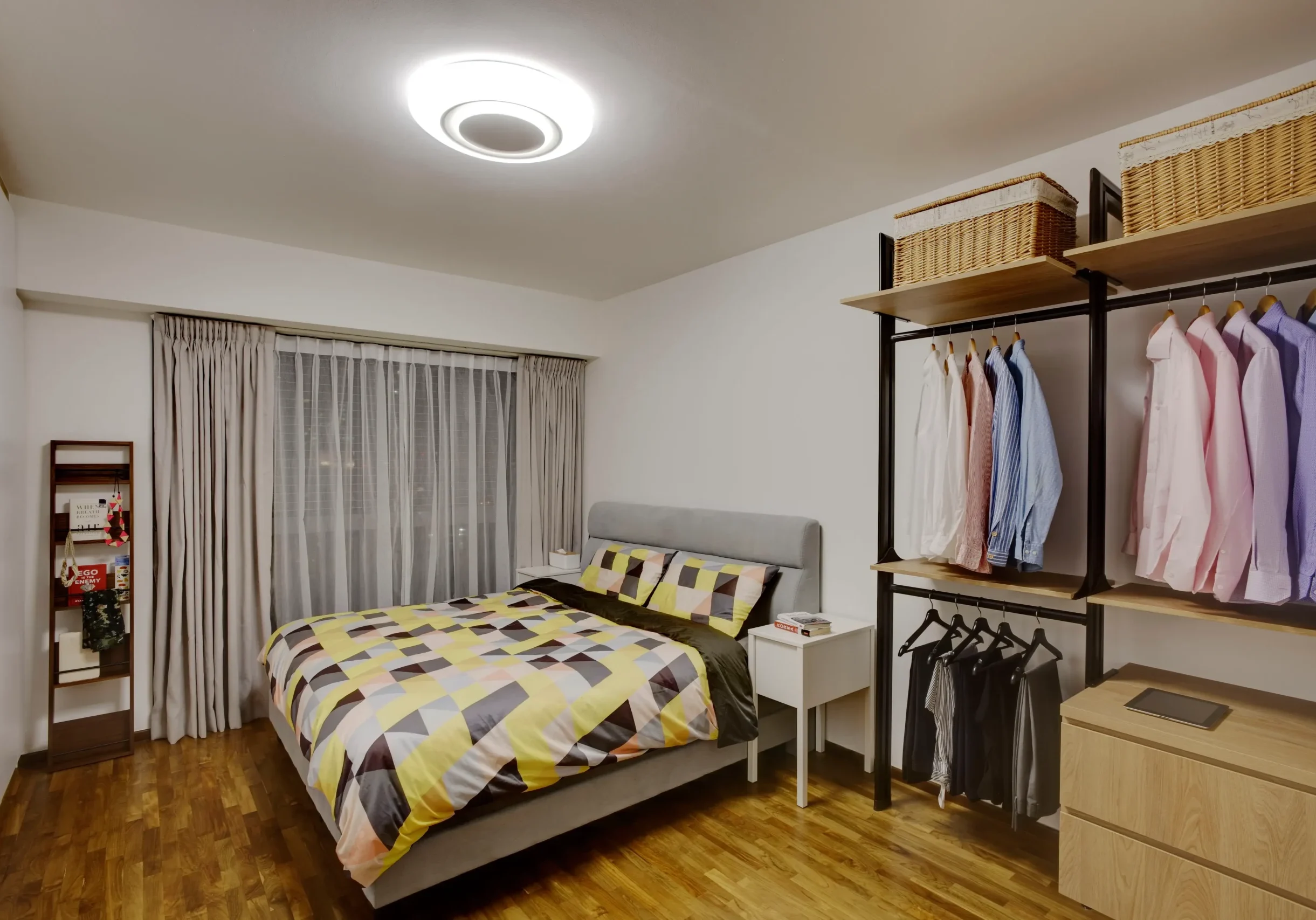
The fix: Finalise your floor plan first — on paper, with actual dimensions. Place furniture in the plan before you purchase anything. A good reference: the Scandinavian Chic project at Yuan Ching Road shows how deliberate furniture placement in a standard HDB layout creates clear circulation and breathing room in every direction.
When we were renovating Scandinavian Chic in Jurong West — 138D Yuan Ching Road, we made sure to plan a layout where every piece is sized and positioned deliberately. Here’s how
2. Choosing a Furniture Scale That Doesn’t Fit the Room
A large sectional sofa that looked elegant in the showroom can fill 40% of a 3-room HDB living room’s floor space and leave nowhere to walk comfortably.
Scale is the most misjudged element of small-space design. Oversized furniture doesn’t make a small room feel grand — it makes it feel cramped. And in Singapore, most showrooms display furniture in rooms significantly larger than the typical HDB living area.
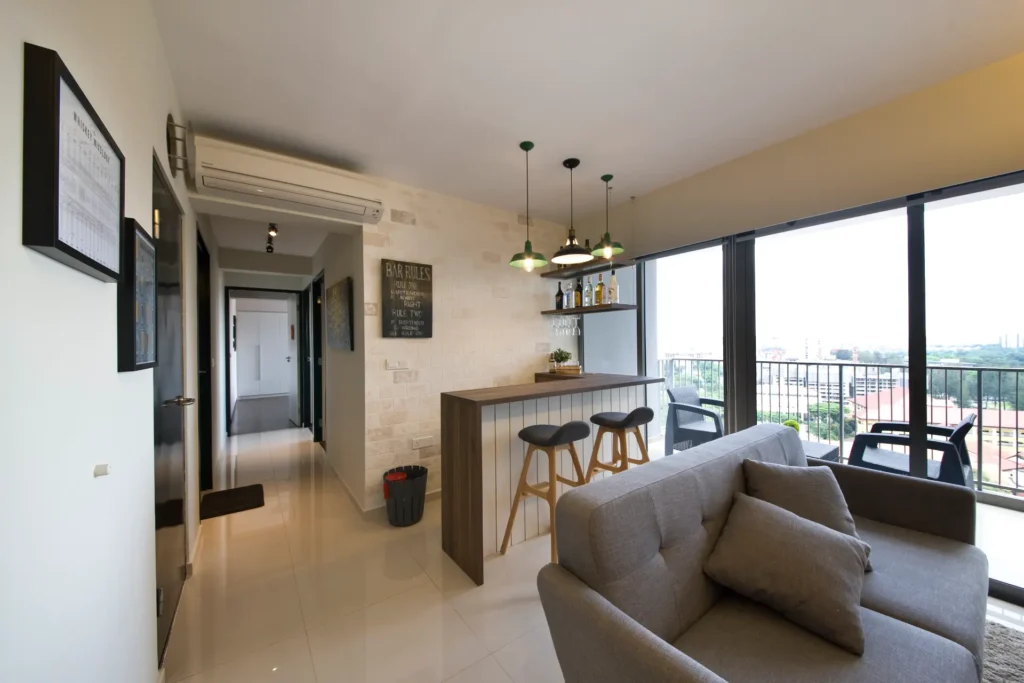
The fix: Bring your room dimensions to the showroom and ask specifically whether the piece will work at your scale. When in doubt, go smaller. The Keep it Minimal project at Bedok is a good example of right-sized furniture: everything fits with room to spare, and that breathing space is exactly what makes the flat feel considered rather than crowded.
As you can see in Keep it Minimal — 152 Bedok, the Furniture scaled to the room, not to the showroom
3. Relying on One Overhead Light Source
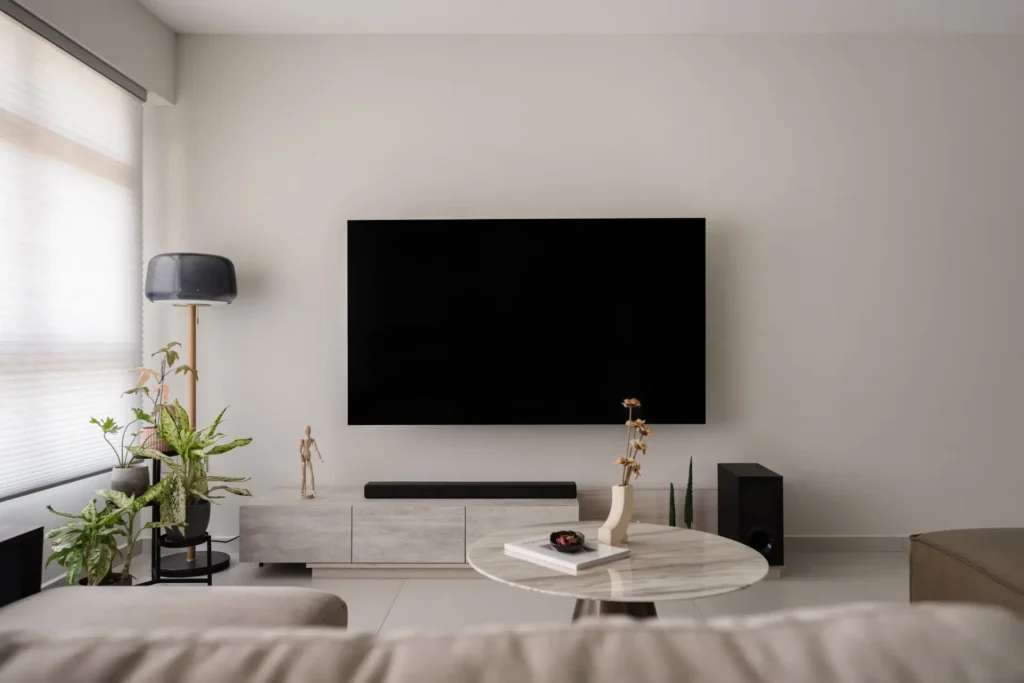
The default single ceiling light is one of the most persistent design flaws in Singapore HDB flats. It lights everything evenly, which means nothing is lit well. The room looks flat, the shadows are harsh, and the warmth you were hoping for disappears the moment you turn it on.
Good lighting has three layers: ambient (the general fill light), task (targeted for cooking, reading, working), and accent (to highlight textures, shelves, or artwork). Together, they create depth and atmosphere. Separately, none of them is enough.
Look at the Earthy Modern project’s dining area — the pendant over the table does two things at once: it defines the dining zone as its own space within the open-plan layout, and it creates a pool of warm, focused light that no ceiling downlight can replicate.
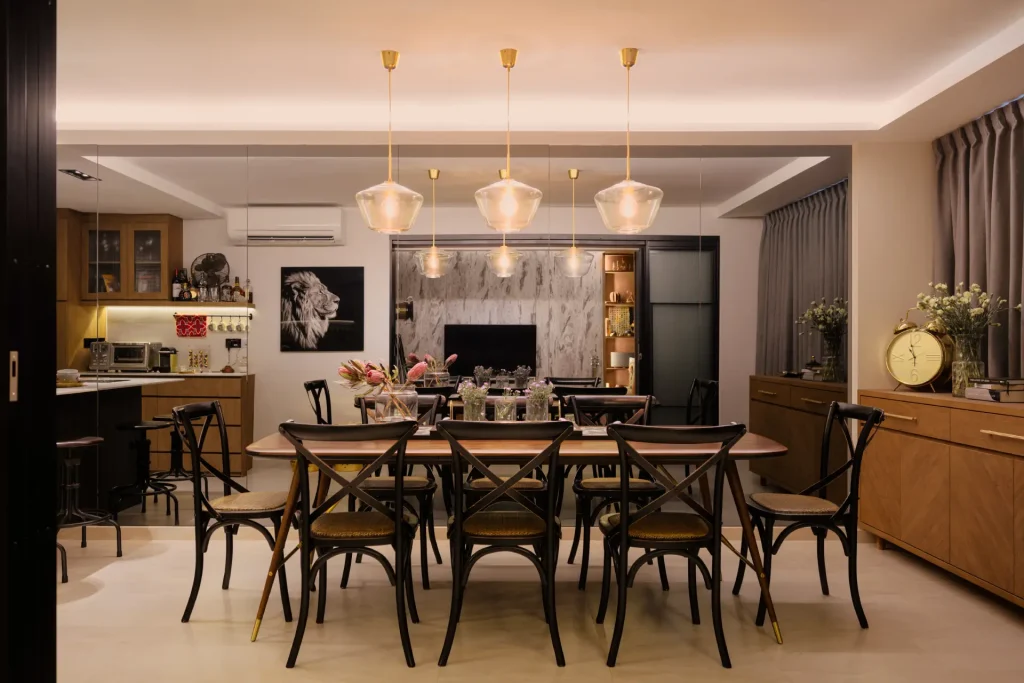
A pendant over the dining table is one of the highest-impact lighting decisions in any HDB flat
The fix: Plan your lighting in three layers from the start. Cove lighting in the false ceiling for ambient warmth. Under-cabinet lighting in the kitchen. A pendant over the dining table. Bedside reading lamps. This doesn’t have to be expensive — but it has to be planned before the electrician points are set.
4. Picking Paint Colours From a Small Chip
A paint colour that looks like a soft warm grey on a 4cm chip can look like a very decisive purple once it’s on all four walls of a bedroom.
Colours behave differently at scale, in different lighting conditions, and against different materials. The warm beige you loved in the showroom might look orange under your flat’s LED downlights. The sage green that photographed beautifully on Instagram might read very differently in a room that doesn’t get the same afternoon light.
The fix: Always test paint colours as large swatches — at least A4 size — applied directly to the wall. Leave them for 24 hours and look at them in both daylight and artificial light before committing. Most paint brands offer small sample pots for this exact purpose.
5. Ignoring Storage Until It’s Too Late
Storage is the silent architecture of a small home. Get it wrong, and you spend years fighting clutter. Get it right, and the flat feels twice as organised as it actually is.
The mistake most homeowners make is treating storage as an afterthought — choosing furniture first and then realising there’s nowhere to put anything. In a small HDB flat, storage needs to be designed into the renovation from the start.
The Keep it Minimal kitchen is a masterclass in this. Every appliance has a home. Every item has a dedicated space. The counter stays clear because the storage was designed to keep it that way — not because the homeowner is unusually tidy.
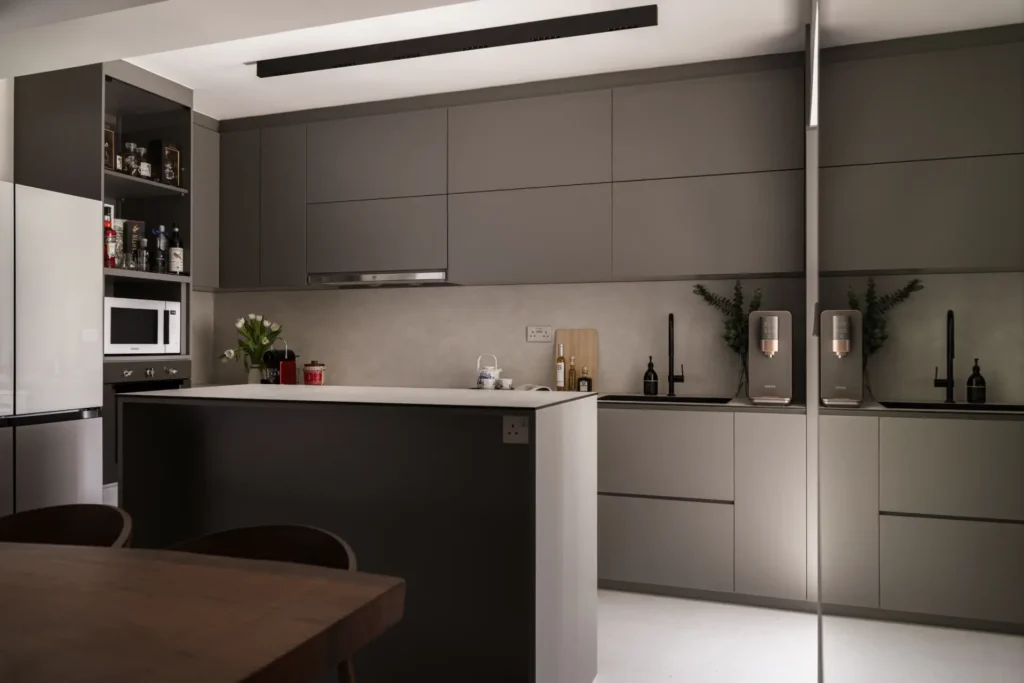
Here, the built-in storage was designed before a single item was purchased
The fix: Before confirming your carpentry scope, go through every room and list what needs to be stored. Be specific — shoes, cleaning supplies, pantry items, tools. Then design storage around actual objects rather than hoping there’ll be enough space.
6. Going All-In on a Trend
The all-white kitchen looked incredible from 2018 to 2021. The grey everything phase lasted about three years before it started feeling cold. The arched doorway trend is already peaking.
Design trends move. In a home you’re planning to live in for 5 – 10 years, building your entire renovation around the current trend is a risk. What photographs well today isn’t always what you’ll want to wake up to in 2030.
The fix: Use trends as accent details, not the structural theme. Keep the bones of the flat, flooring, carpentry, and wall colour in a timeless direction. The Earthy Modern project at Eunos Crescent is a good example of a timeless material story: natural textures, warm wood tones, and a muted palette that won’t look dated in five years.
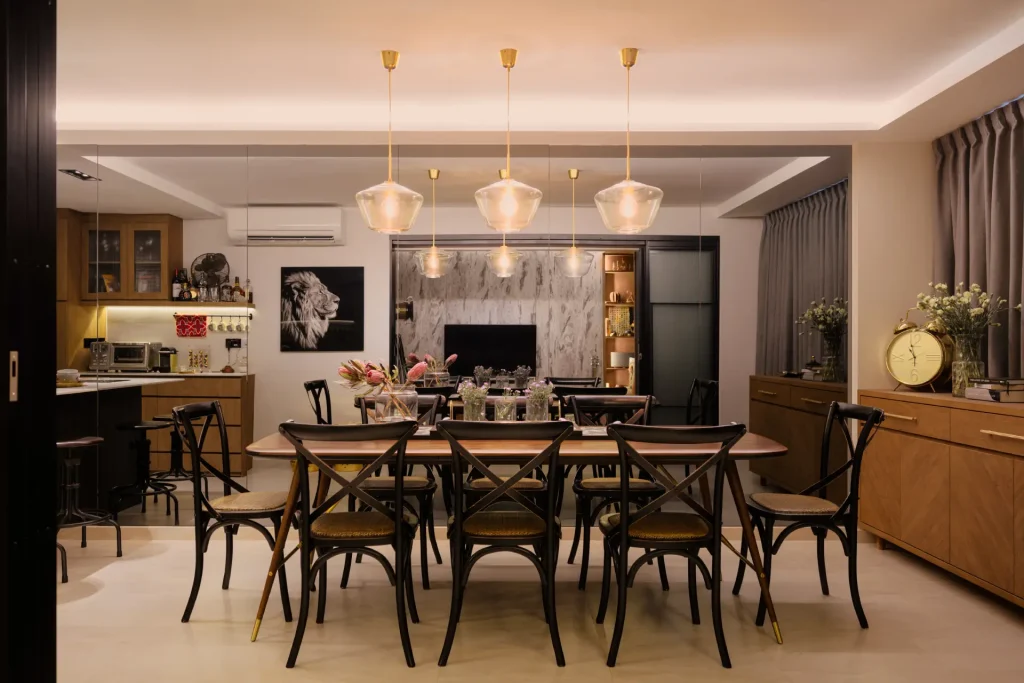
Earthy Modern — 20 Eunos Crescent | A material palette designed to outlast the trend cycle
7. Skipping the Entrance
The entrance of an HDB flat is one of the smallest areas and one of the most neglected. Most homeowners put their effort into the living room, kitchen, and master bedroom — and the entrance ends up as a forgotten corridor with a basic shoe rack and no design intent.
The entrance is the first thing you see when you come home and the first thing guests notice. It sets the tone for everything beyond it.
The fix: Invest in a properly built-in shoe cabinet that extends to the ceiling for maximum storage.
- Add a mirror; it creates depth and gives the entrance purpose.
- A small pendant or wall sconce at the entrance makes a significant difference to how the space feels.
The Japanese Modernism project at Cantonment Road shows how a deliberately designed entry corridor is clean, intentional, and uncluttered, instantly signalling that the rest of the home will be equally considered.
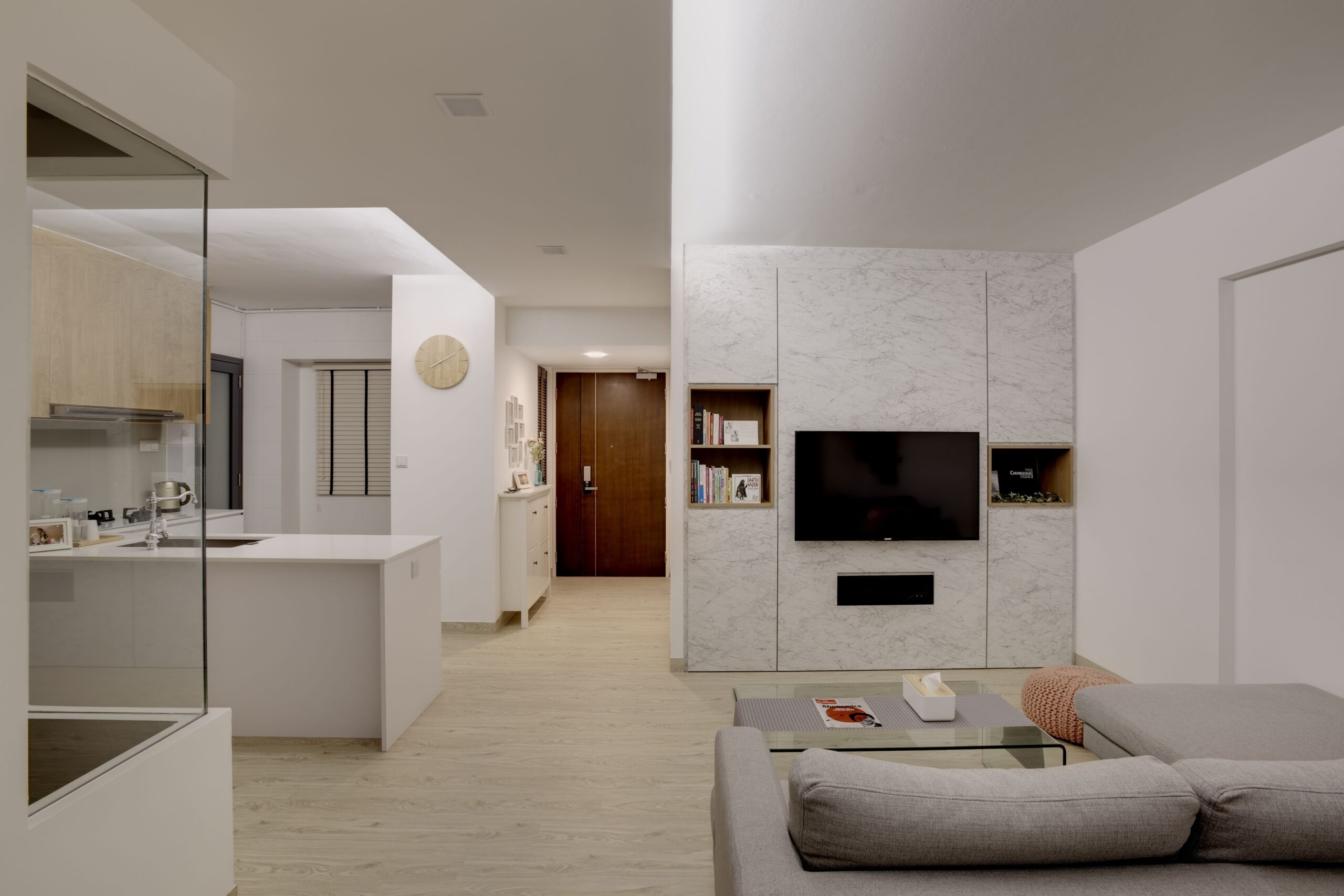
Japanese Modernism — 1G Cantonment Road | The entrance sets the tone for everything beyond it
8. Choosing Flooring for How It Looks, Not How It Performs
White or very light flooring looks stunning in photos and in a showroom. In a Singapore HDB flat with daily foot traffic, it shows every scuff, stain, and footprint. Similarly, genuine hardwood flooring — beautiful as it is — is high-maintenance in Singapore’s humidity and temperature fluctuations.
The fix: Choose flooring by asking two questions: how will this look after two years of real use, and how does it perform in Singapore’s humidity? Engineered timber, quality vinyl plank (SPC), and homogeneous tiles in mid-tones all offer good performance with long aesthetic life. The Sleek Nordic project uses consistent flooring through its living and dining areas — a mid-tone that’s practical without being boring.
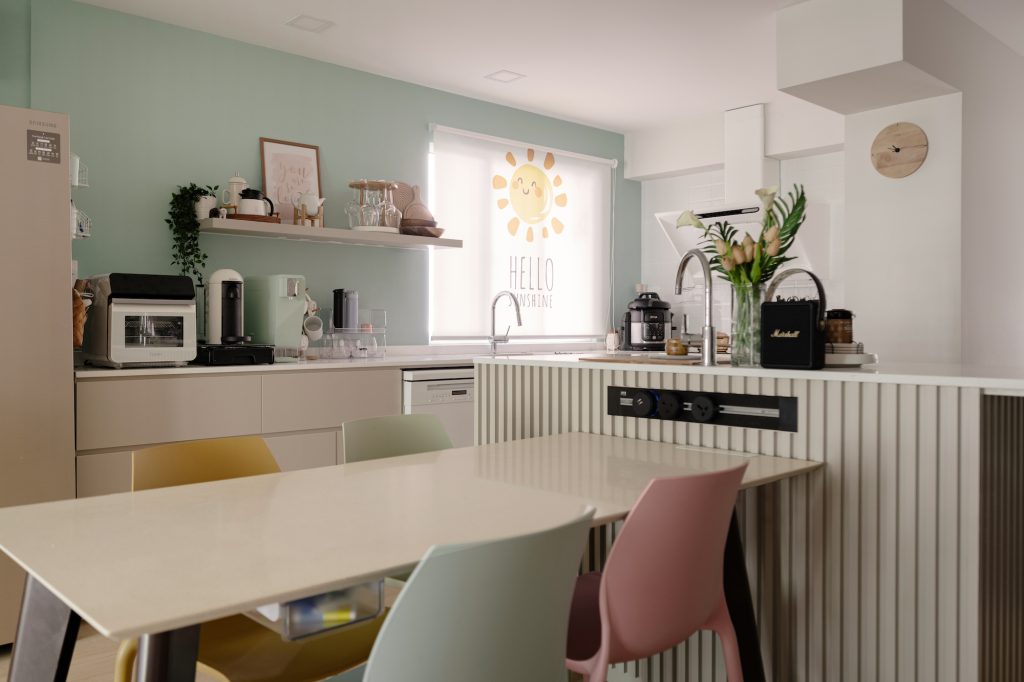
In Sleek Nordic — 172A Edgedale Plains, you can see that consistent flooring across zones makes the flat read as one space
9. Open-Concept Kitchen Without Adequate Ventilation
Open-concept kitchens are enormously popular in Singapore HDB renovations because they make small flats feel more connected and spacious. They work beautifully — until someone fries sambal belacan and the smell settles into every soft surface in the flat.
Singapore’s cooking culture is real. The open-concept kitchen works, but it requires a powerful ventilation hood (90cm minimum, ideally ducted rather than recirculating) and sometimes a glass panel option for when you need to contain smells.
The fix: Before removing the kitchen wall entirely, confirm that your ventilation setup can handle your actual cooking habits. The Keep it Minimal kitchen, fully open to the dining area, works because the ventilation was addressed as a design requirement, not an afterthought.
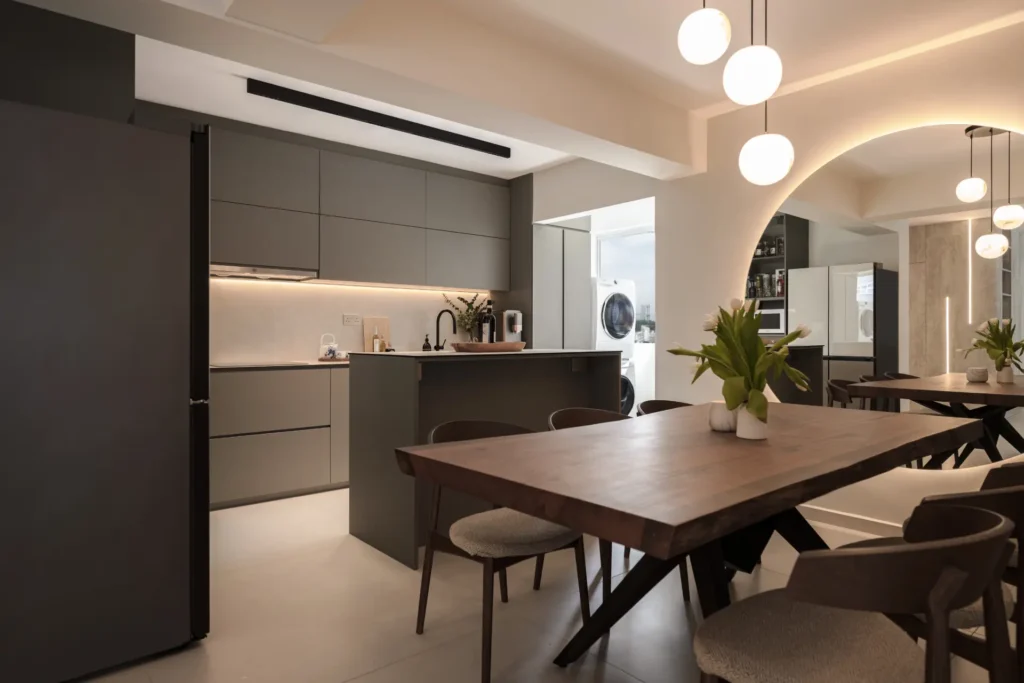
In Keep it Minimal — 152 Bedok, we designed an open kitchen that works because ventilation was part of the brief
10. Not Leaving Room for the Flat to Breathe
This one is harder to define but easy to recognise. It’s the flat that has every piece of furniture in place, every shelf styled, every surface considered — and yet feels somehow exhausting to be in.
The problem is density. Small HDB flats need negative space — visual pauses where the eye can rest. A wall that isn’t covered. A corner that isn’t filled. A shelf with three objects instead of fifteen.
The Japanese Modernism project at Cantonment Road understands this better than most. There is space between things. The room has room to breathe. That’s not accidental — it’s the hardest discipline in small-space design, and it’s exactly what makes the flat feel calm rather than crowded.
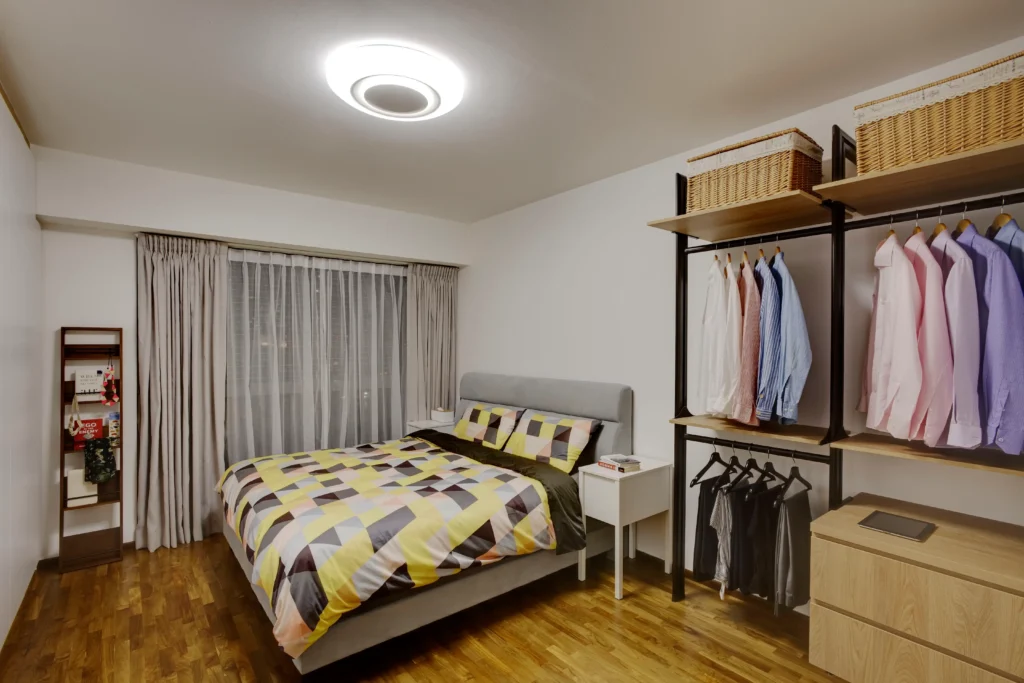
As you can see, in Japanese Modernism — 1G Cantonment Road, negative space isn’t emptiness — it’s the design
The fix: When you think you’re done, take one thing away from each room. Then assess. In a small flat, restraint is almost always the right call. The things you leave out matter as much as the things you put in.
The Common Thread Behind These Mistakes
Look back at all ten, and you’ll notice the same pattern. None of them are really about style going wrong. They’re about decisions made in the wrong order — too late, without the floor plan in hand, or with a sofa already chosen before anyone thought about how people would walk through the room. A flat that ends up feeling slightly off is rarely because of one bad choice. It’s usually because the renovation started with how things should look, and only got around to how things should work near the end.
It’s easier when you do it the other way round. Start with how you actually live. Where does the family gather? Where do you cook, and how often? If shoes pile up, where do they go and where does the laundry land, where does your morning coffee happen? Map the layout to that first. Plan storage, lighting, and the routes you walk every day before anything is bought. Pick materials based on how they’ll look after two years of real use, not how they look in a showroom on a Saturday afternoon. Once those decisions are settled, the aesthetic ones become surprisingly easy — and almost always better.
Most homeowners who come to us at This Mood Board arrive at one of two moments: right at the start, before any decisions are made, or partway in, after a few have already gone the wrong way. Both are workable. The first is just a lot less stressful. If you’re at the beginning of a renovation and you’d rather avoid the mistakes above before they turn into expensive ones, the most useful thing we can do is sit down with you and look at your floor plan together.
Talk to This Mood Board about your HDB renovation today.
Frequently Asked Questions
What’s the single most important thing to get right in a small HDB renovation?
Layout and storage. Get those right, and everything else is adjustable. Get them wrong, and no amount of styling fixes it.
Should I hire an interior designer for a small HDB flat?
Not a legal requirement, but for a full renovation, an experienced ID brings space planning knowledge that genuinely produces better results in compact homes. If the budget is tight, even a one-off consultation to review your layout and material choices is worth doing.
How do I make a small HDB living room look bigger?
Consistent flooring from the entrance through the living area, light tones on the walls, furniture scaled to the room (not the showroom), a mirror on one wall, and layered lighting. These five moves have more impact than any individual design choice.
Is an open-concept kitchen worth it for an HDB flat?
Usually yes, but only if you address ventilation properly. A well-designed open-concept kitchen makes a small flat feel significantly larger. A poorly ventilated one turns every cooking session into a whole flat problem.
How do I avoid the feeling of being dated in five years?
Keep the structural choices — flooring, carpentry finishes, wall colour — in timeless territory. Use trends only in elements that can be changed cheaply: cushion covers, a rug, a pendant light, a vase. The renovation’s bones should be able to outlive whatever’s trending right now.
What’s the biggest lighting mistake in HDB renovations?
Relying on a single ceiling downlight per room. It’s not enough. Layered lighting — ambient, task, accent — makes a disproportionate difference to how a flat feels and costs less than most homeowners expect.