Singapore’s City-in-a-Garden Aesthetic: Bringing Biophilic Harmony Into Your Home

Singapore’s reputation as a City in a Garden reflects how nature is integrated into everyday urban life. Parks sit alongside high-rises, sky gardens rise above streets, and tree-lined walkways connect neighbourhoods. Living here means living with nature, not away from it. The same principles can be applied indoors. Biophilic design is the practice of strengthening our connection with nature indoors. It supports layouts to create spaces that feel more comfortable and connected to the outdoors. With thoughtful choices, anyone can bring the balance between city living and nature, creating a practical and calming environment.
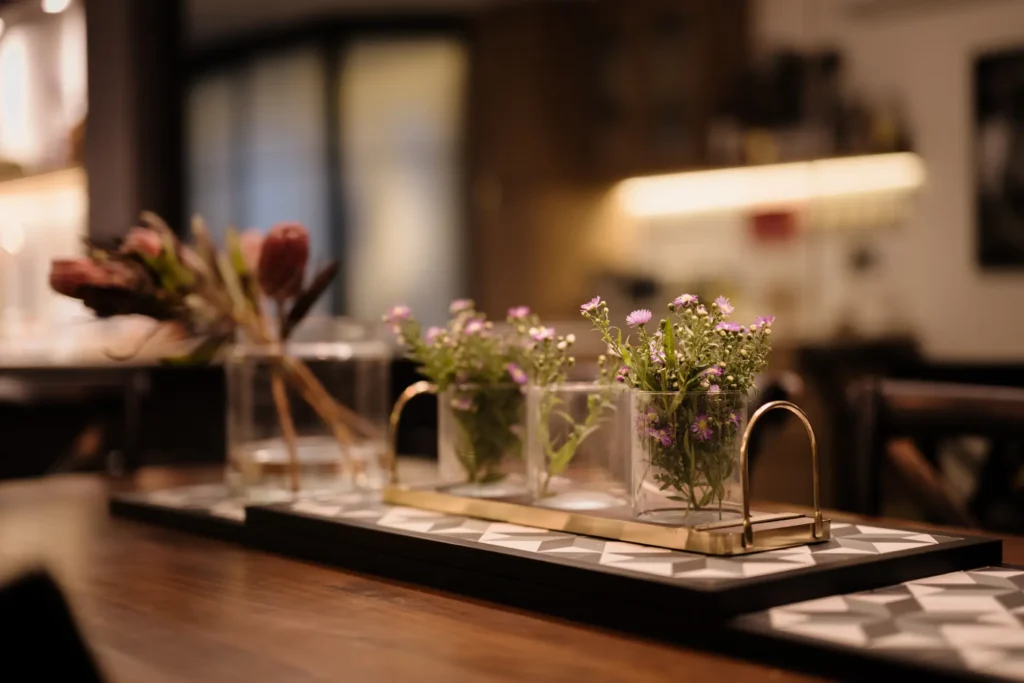
Below, we explore simple, soothing and wellness-focused ways to design with nature at the heart.
1. The Wellness Science Behind Biophilic Living
Exposure to natural elements can support mood and improve sleep quality. Interiors that include greenery, natural textures, and light may help the body feel more relaxed and supported.
Elements that can be included:
- Indoor greenery
- Natural materials and textures
- Abundant light
- Earth-based palettes
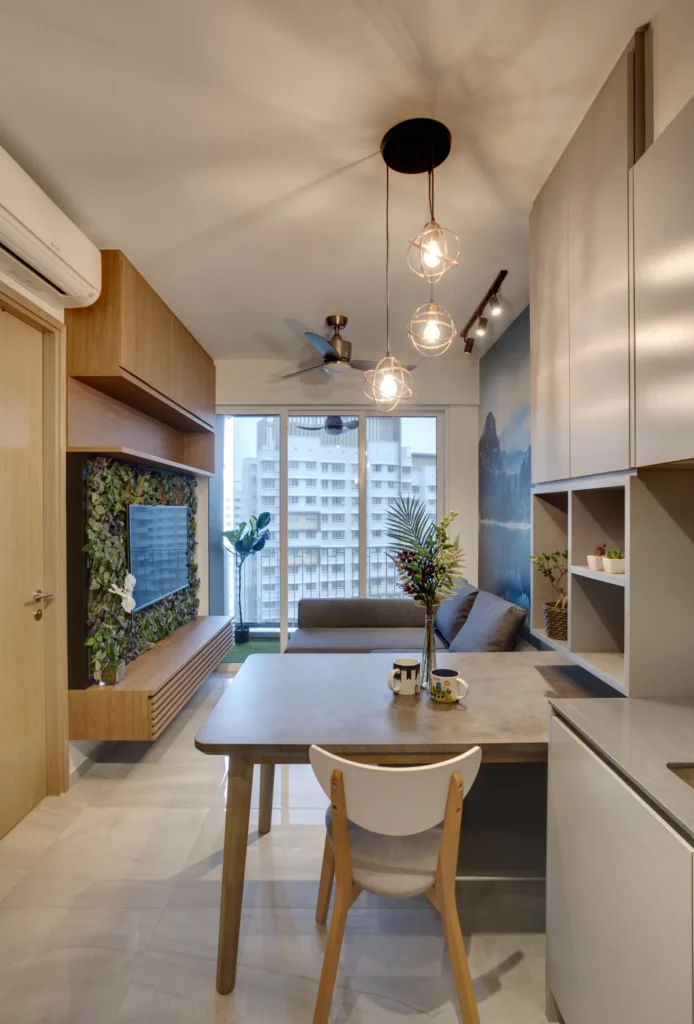
Sustainable materials also support physical well-being. Low-VOC or eco-friendly options reduce indoor toxins and may improve air quality.
2. Greenery as Serenity: Applying Plant Life the Right Way
Indoor plants are central to biophilic interiors, and the key is placement with intention, not merely adding greenery for the sake of it.
Soothing plant choices for tropical climates
- Peace lily
- Fiddle-leaf fig
- Pothos
- Areca palm
- Monstera
These plants thrive in humidity and offer lush, calming visual texture.

The layering method (for harmony, not clutter)
Tall plants can anchor corners, while mid-height plants fill open spaces to make the layout feel balanced, and Tabletop plants add texture and interest. It’s not just about scattering plants around. Try clustering the plants! In humid Singapore, plants love hanging out together. Grouping them helps them share moisture and makes them happier.
Think of your plants as a living sculpture. Instead of putting a single pot on the floor, use stands or stools of different heights. This will create a real forest feel and trick your eye into thinking your ceilings are higher. More importantly, caring for your plants becomes a quiet, calming ritual. That daily check-in for misting a fern or wiping a leaf is a perfect, peaceful break from your busy city day.
Creating small “green zones,” such as a reading corner with a plant cluster, can make interiors feel more natural and pleasant.
3. Tropical Light as a Wellness Design Tool
Natural light affects how comfortable and visually appealing a space feels.

During the day
- Keep windows clear of heavy blockages
- Choose sheer curtains or lightweight blinds to diffuse sunlight instead of blocking it
- Use reflective flooring or light wall colours to enhance a sense of openness and space
Light that feels airy and natural makes a room feel more expansive, especially valuable in compact homes. Natural light brightens compact rooms, but it may cause fading on certain fabrics over time.

At night
Support the body’s shift into rest with lighting that mimics sunset:
- Use warm bulbs
- Layer soft lighting with table lamps and wall sconces
- Avoid overly bright white overhead lights during late evenings
When lighting works with circadian rhythm rather than against it, home naturally becomes a space of calm.
4. Eco-Materials for Calm, Comfort & Sustainability
Materials play a powerful role in subconscious relaxation. Natural materials feel grounding because they resonate with textures we find in nature.
Ideal for both comfort and tropical durability:
- Rattan adds texture and durability.
- Linen and cotton textiles are breathable and comfortable
- Clay tiles offer a natural, earthy surface
These materials change slightly over time, they age gracefully, which brings warmth.

We spend so much time looking at screens, but our hands actually crave texture. That’s why natural materials feel so good. Don’t be afraid of things that look a little imperfect, like an old wooden table with knots, or a linen throw that wrinkles. This appreciation for age and wear makes a house feel welcoming.
Touch your furniture when you’re choosing it . Does the cool, smooth clay contrast nicely with the warm, grainy wood? Does the rug feel grounding under your bare feet? Prioritizing comfort and texture is just as important as how good it looks in a photo.
Sustainable decor also supports physical wellness. Low-VOC materials reduce indoor toxins, helping prevent fatigue and protecting respiratory health, an important consideration in humid climates where synthetic materials can trap moisture and odour.
5. Designing with Singapore’s Green Urban Identity
Biophilic design becomes even more meaningful when it is inspired by the spaces we recognise and love.
Nature-inspired influences from Singapore
- Greenhouse tones inspired by Gardens by the Bay
- Shaded pathways inspired by Botanic Gardens
- Vertical greenery influenced by sky gardens in residential buildings
Borrow ideas from our local heritage. Have you ever noticed the striking look of the old Black and White bungalows? They use dark wood frames against bright white walls to frame the lush, green gardens outside. It’s a classic, beautiful contrast.
You can copy this look indoors. Try using matte black or dark wooden trims and fixtures to create a strong frame for your indoor plants. The dark colour makes the bright green leaves instantly pop! It’s a simple way to get that, high-end “resort” feeling that you find in places like Dempsey. It’s all about making your home feel like a unique local blend of elegance and tropical wildness.
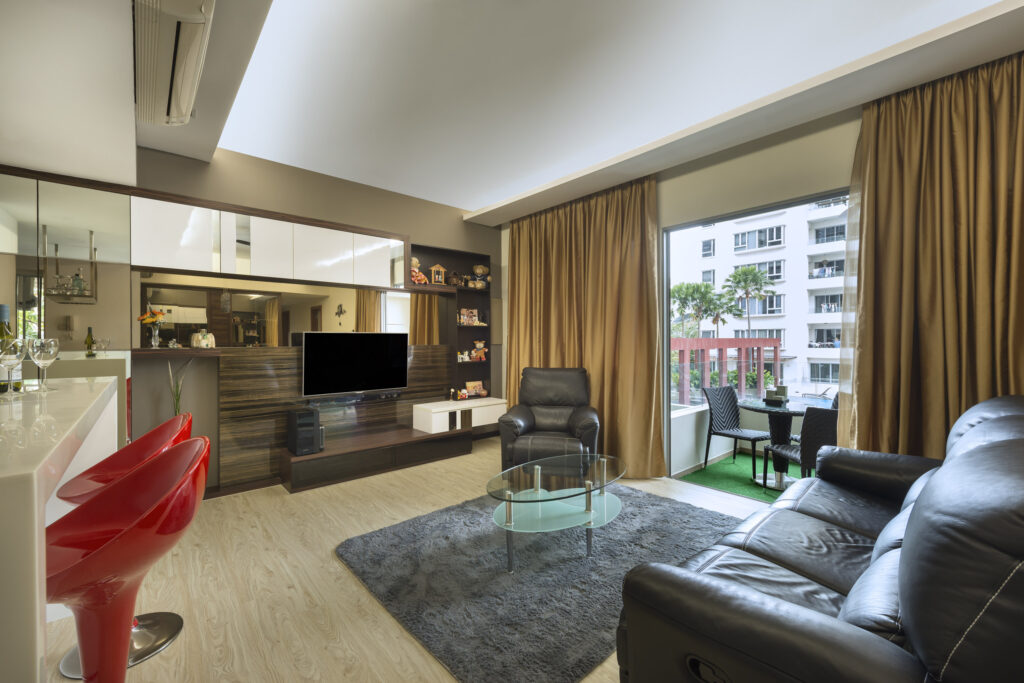
Use these cues at home through colour and texture palettes:
- Lush botanical greens
- Deep earth shades
- Terracotta accents
- Soft sand tones
Water elements also support emotional ease, think tabletop fountains, shells, ocean-inspired decor, or spa-like bathroom stone textures. These subtle details echo Singapore’s blending of land, water and greenery.
6. Smart Layouts for Tropical Wellness Living
Even the most beautiful furniture and decor won’t feel calming without flow. In tropical climates, air circulation affects not only comfort but mood.

To support wellness:
- Keep pathways open for smooth movement
- Avoid blocking natural light with bulky furniture
- Use modular or foldable pieces so rooms can “rest” when not in use
- Position plants to complement, not obstruct airflow
The home should feel breathable. A space that allows both people and air to move freely reduces sensory stress and enhances relaxation.
7. Quick & Affordable Biophilic Upgrades
Creating a city-in-a-garden interior doesn’t require a renovation. Small, intentional choices can completely shift the mood of a room.

Try:
- Swapping dark curtains for breezy sheer ones
- Adding woven rattan baskets for natural warmth and texture, but need a dry climate
- Linen bedding wrinkles, but it also supports breathability and sleep calm.
- Introducing a natural rug underfoot for sensory grounding
- Installing a “living shelf” with cascading plants
- Starting a small kitchen herb corner for smell-based relaxation
Even one indoor plant has been shown to improve mood within a week, nature doesn’t have to be dramatic to be impactful.
Conclusion
Biophilic design is not about filling the home with plants or recreating an outdoor garden indoors. It’s a way of living with nature, not separate from it.
By using greenery, natural textures, warm light, and sustainable materials, your space feels calm and more balanced. Small, intentional choices can make a big difference, whether it’s a cluster of indoor plants, a linen rug, or diffused natural light.
Nature has always been one of the most powerful sources of healing. When we allow it into our homes, we bring that healing closer to ourselves.
Frequently Asked Questions
What does the biophilic aesthetic mean in interior design?
It’s a design style that blends urban living with greenery. This means pairing clean, contemporary layouts with plants, natural textures, and soft, warm lighting to create a calm, biophilic home that reflects Singapore’s green urban spaces..
How can I incorporate biophilic design into my home without major renovations?
Small, intentional changes can make a big difference. Introduce clusters of indoor plants, use natural materials like wood, rattan, or stone, let in more sunlight, switch to warm or diffused lighting, and choose nature-inspired colors like sage, terracotta, or sand tones. Even a few well-placed touches can transform your home.
Which indoor plants work best for a biophilic style interior?
Choose tropical, low-maintenance plants that thrive indoors and create visual impact. Examples include monstera, fiddle-leaf fig, pothos, snake plants, and bamboo palms.Spaces that feel close to nature tend to feel more soothing to live and work in.
Do biophilic interiors really support emotional and mental well-being?
Yes. Research and practical experience show that exposure to greenery, natural textures, and sunlight reduces stress, improves concentration, supports sleep, and creates a sense of calm. A thoughtfully designed biophilic space can make everyday living more peaceful and restorative.