How to Choose the Best Interior Design Style for Your HDB Flat in Singapore
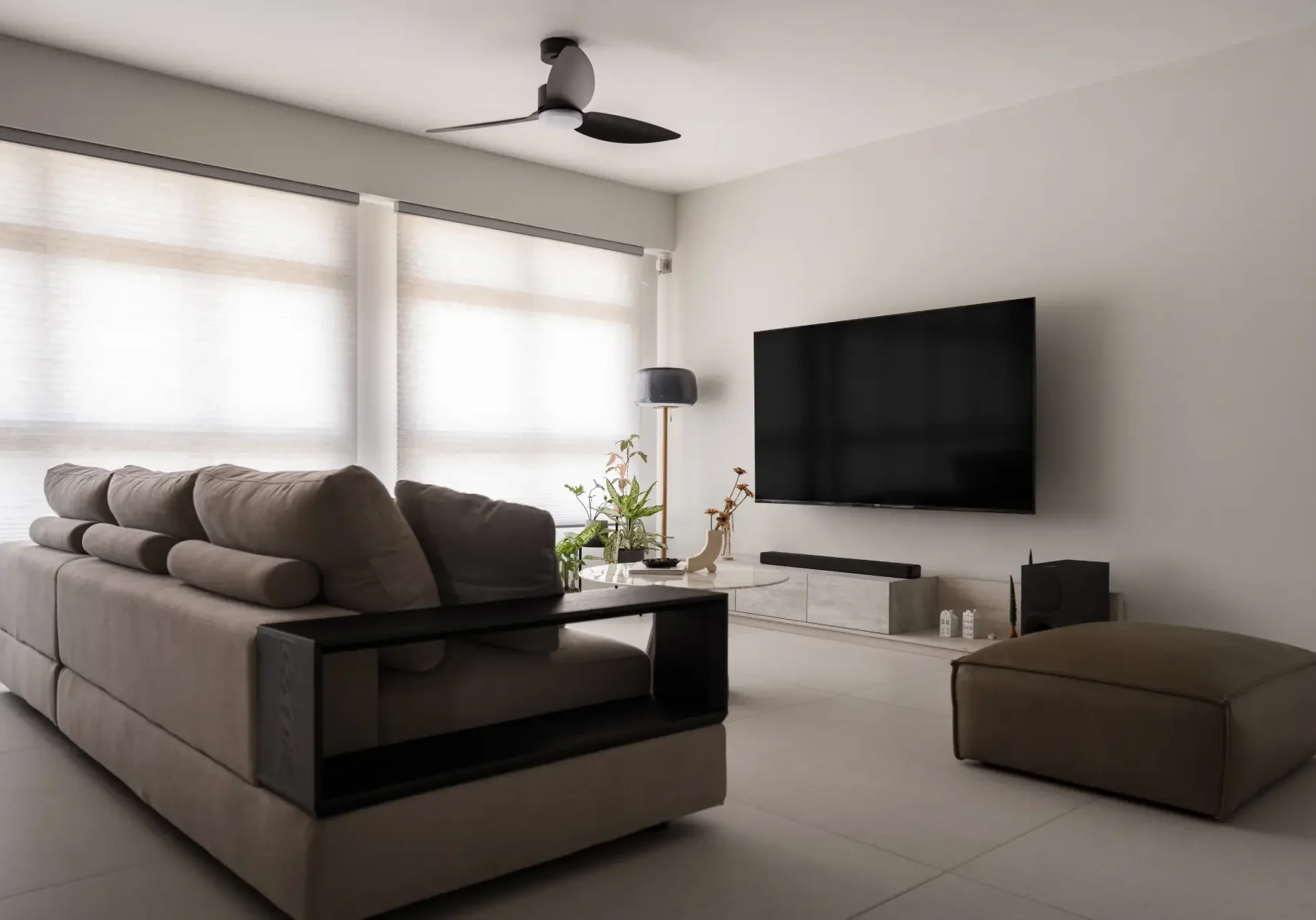
The best interior design style for an HDB flat in Singapore is one that balances storage efficiency, renovation budget, maintenance effort, and spatial limitations. Popular choices such as Scandinavian, Japandi, and Modern Minimalist work well because they maximise space while keeping renovation costs manageable.
In Singapore, the right style goes beyond aesthetics; it determines how comfortable, practical, and durable your home will be.
You should know that the best interior design will always bring a balance to beauty, maintenance, resale value, and functionality.
After more than a decade of working with HDB homeowners, this is what I have found. Many homeowners choose the wrong style at first, and it’s not because they lack good design taste, but because they don’t understand that interior design needs to match how you live your daily life. And this mistake can be expensive.
At ThisMoodBoard, we have studied hundreds of Singapore renovation projects and curated interior styles that work best within HDB spatial constraints. The examples throughout this guide come from real homes designed for practical living in Singapore.
Comparison Table of Popular HDB Interior Design Styles
| Style | Best For | Cost Range | Maintenance | Storage Efficiency |
| Scandinavian | Small flat, families | $30k–$55k | Easy | High |
| Modern Minimalist | Young couples | $35k–$60k | Easy | Medium |
| Contemporary Luxury | Larger flats | $60k–$100k | Moderate | Medium |
| Japandi | Calm lifestyle-focused owners | $40k–$70k | Easy | High |
| Industrial | Single bold personalities | $45k–$80k | Moderate | Low |
| Modern classic | Long-term family homes | $55k–$90k | Moderate | High |
Why Interior Design Style Matters in HDB Homes
Unlike landed homes, HDB flats come with structural limitations that affect layout planning, storage design, and renovation flexibility. These limitations include:
- Cannot shift structural walls
- Service yards must remain intact
- Household shelters cannot be altered
- Ceiling heights are fixed.
That means your interior design style directly impacts:
- Storage efficiency
- Traffic flow
- Lighting distribution
- Maintenance effort
- Renovation cost
- Long-term resale value
Your interior design must suit HDB spatial constraints to avoid lifestyle inconvenience. Notice how this home looks spotless but still practical with a Scandinavian-minimalist style with concealed storage. That balance is everything.
Top HDB Interior Design Styles in Singapore
Below, we discuss some trending best interior design styles for HDB flats in Singapore.
Scandinavian Interior Design
Scandinavian interior design HDB homes remain the most popular choice in Singapore. It’s especially comfortable for new parents or parents with kids.
Characteristics of Scandinavian Homes:
- Light wood tones
- White or neutral colour palette
- Clean lines
- Functional furniture
- Open layouts
A typical Scandinavian HDB living room design doesn’t do too much. It uses bright walls, oak carpentry, soft lighting, and minimal clutter.
Materials Commonly Used:
- Laminated light wood carpentry
- Vinyl flooring in oak tones
- Quartz countertops
- Matte finishes
Layout Choices include:
- Open kitchen concept
- Built-in concealed storage
- Multipurpose dining spaces
Pros:
- More storage
- Easier maintenance
- Durable materials
- Family-friendly layouts
- Makes small flats feel larger
- High resale appeal
Cons:
- It can feel too plain if poorly styled
- Requires good carpentry planning
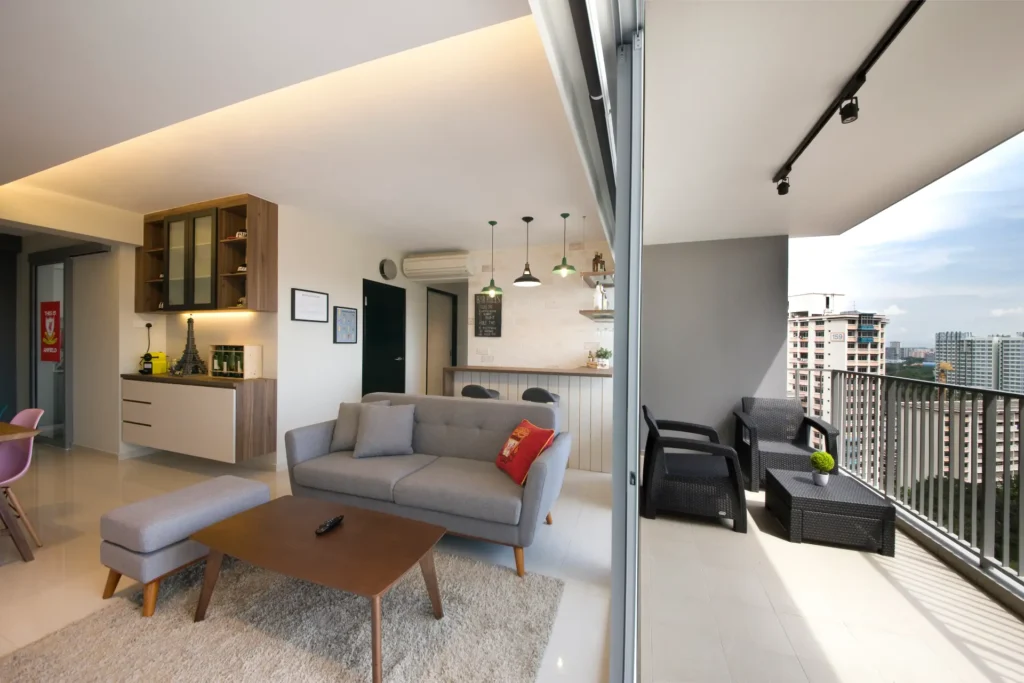
This Mood Board did a fantastic job on a family-friendly project here. Notice the smart storage that makes it one of the best small HDB interior design ideas.
Japandi Interior Design
The Japandi minimalist home combines Japanese minimalism with Scandinavian warmth to create a modern, elegant home.
Characteristics:
- Earthy tones
- Clean-lined carpentry
- Textured finishes
- Calm, muted palette
- Intentional furniture placement
Materials:
- Wood veneer
- Stone surfaces
- Textured laminates
- Warm lighting
Layout Choices:
- Low-profile furniture
- Built-in storage walls
- Open circulation paths
Pros:
- Calm ambience
- clutter-free aesthetic
- Strong storage efficiency
- Durable
Cons:
- Carpentry cost is higher
- Requires consistent styling
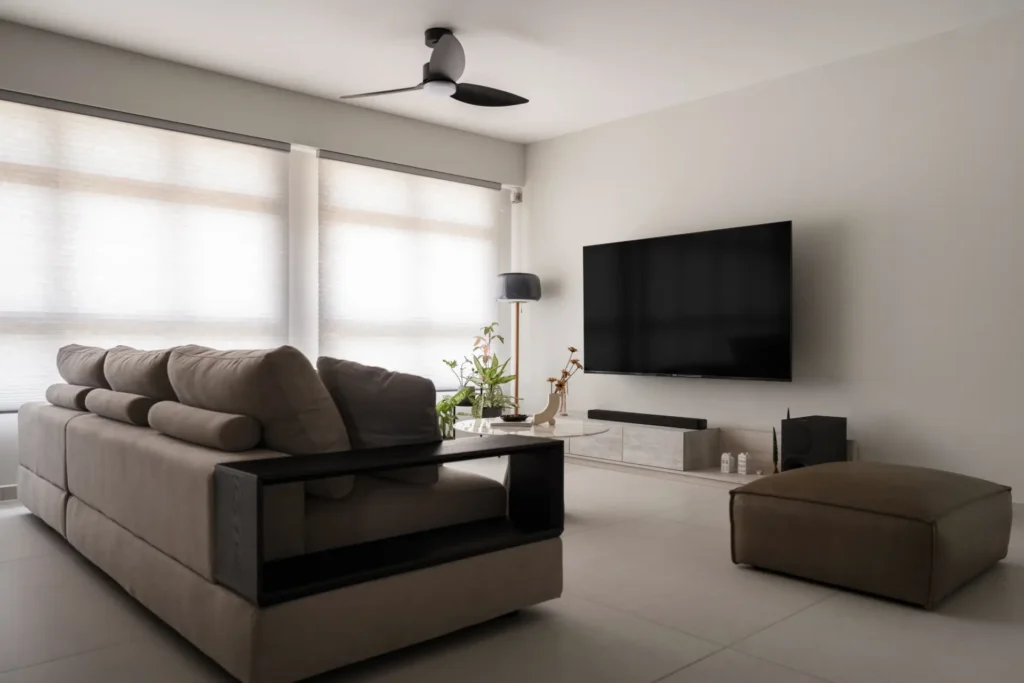
Japandi works best for homeowners who value peace, order, and simplicity. The design is modern and balances out a wide variety of features, just like in this image.
Modern Minimalist Interior Design
This design focuses on simplicity and functionality.
Characteristics:
- Flat-panel cabinetry
- Neutral tones (white, beige, grey)
- Hidden storage
- Clean surfaces
Materials:
- Laminate finishes
- Quartz kitchen tops
- Vinyl flooring
- Slim carpentry profiles
Layout Choices:
- Concealed wardrobes
- Seamless TV feature walls
- Integrated study corners
Pros:
- Budget-friendly compared to luxury styles
- Clean and practical
- Good for resale
Cons:
- Storage can be insufficient if not planned properly
- It can look sterile without texture
Modern minimalist works well for young couples and first-time homeowners.
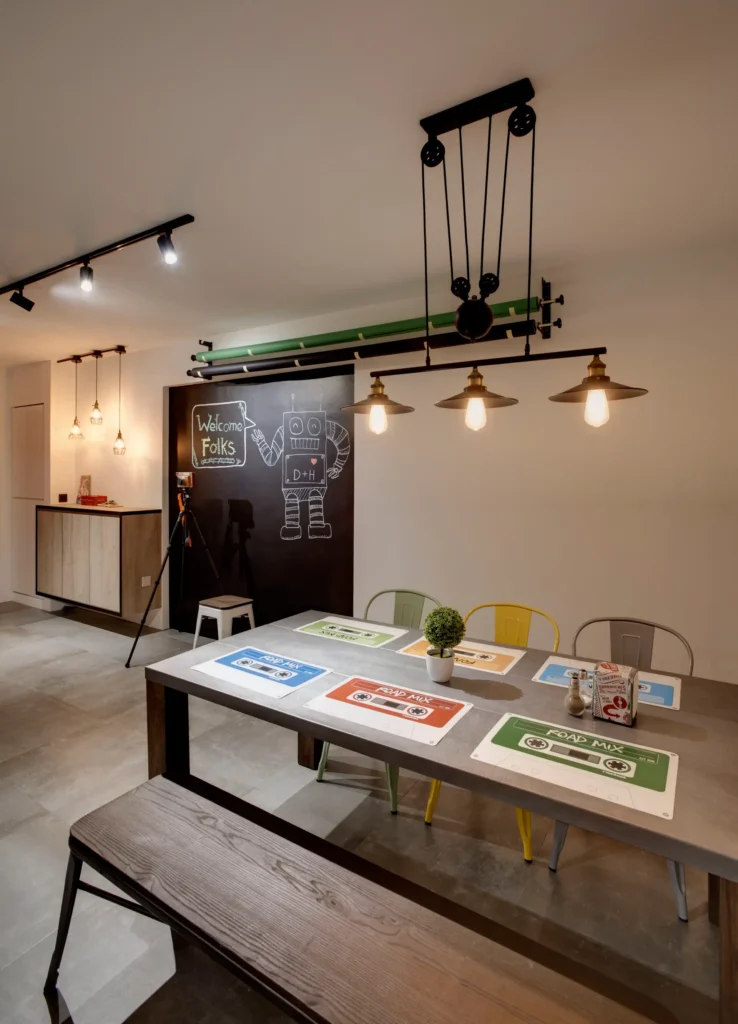
Industrial Interior Design
Industrial living room design homes are usually bold and edgy.
Characteristics:
- Exposed brick or cement finishes
- Black metal accents
- Dark colour palettes
- Raw materials
Materials:
- Cement screed
- Metal frames
- Dark laminates
- Edison lighting
Layout Choices:
- Open shelving
- Statement lighting
- Minimal partitions
Pros:
- Strong visual personality
- Unique, non-traditional aesthetic
Cons:
- Makes small HDB flats feel smaller
- Harder to maintain
- Lower resale appeal
Industrial works best in larger HDB units or for homeowners who prioritise character over practicality.
Contemporary Luxury Interior Design
Many homeowners want a practical home that still looks luxurious. But here is the truth most designers won’t tell you:
A luxury home is not about spending more on gold finishes.
It’s about:
- Good lighting layers
- Proper proportions
- Clean carpentry design
Characteristics:
- Layered lighting
- Feature walls
- Clean yet premium finishes
- Statement elements
Materials:
- Marble-look sintered stone
- Glass panels
- Fluted features
- Custom carpentry
Layout Choices:
- Walk-in wardrobes
- Kitchen islands (where space allows)
- Built-in shelving dividers
Pros:
- High-end appearance
- Impressive for entertaining
- Strong visual impact
Cons:
- Higher renovation cost
- More maintenance required
Luxury is not about gold trims. It is about proportion, lighting, and quality carpentry.
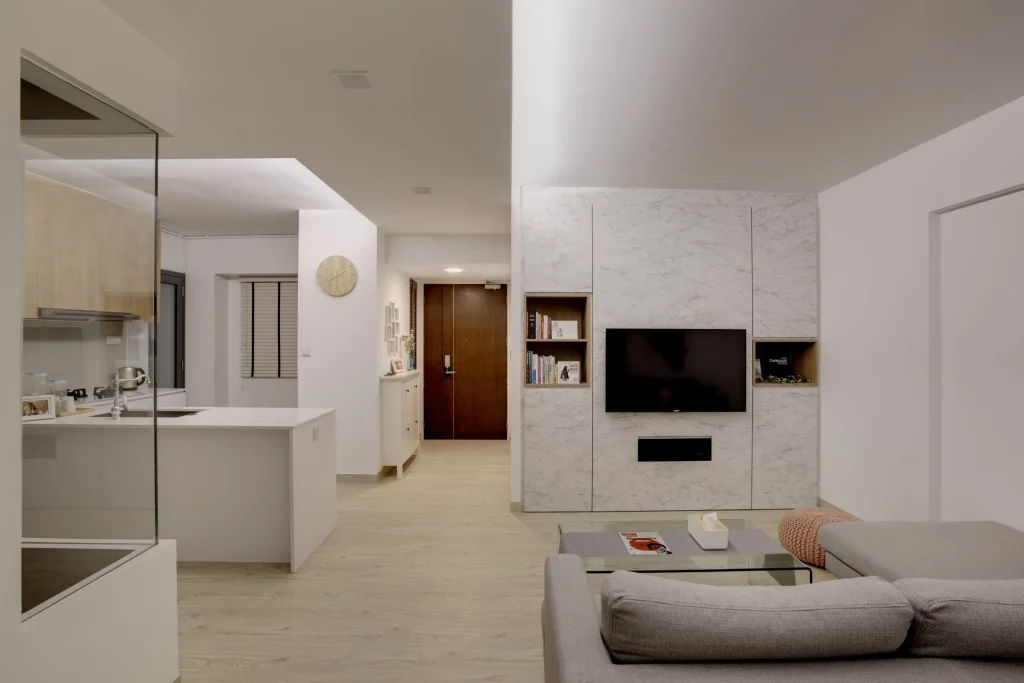
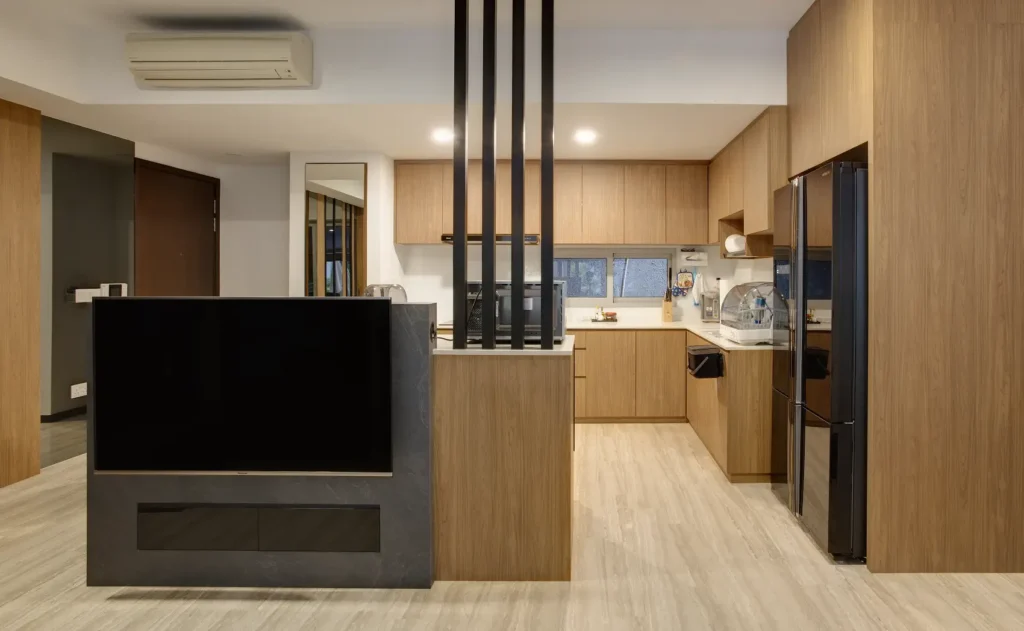
Notice the clean, functional, and space-efficient carpentry work in this home, and how the built-in shelves serve both as storage and a subtle space divider.
Modern Classic Interior Design
A modern classic interior design blends traditional detailing with contemporary layouts to create an elegant space.
Characteristics:
- Panel moulding
- Soft neutral palette
- Symmetrical layouts
- Elegant carpentry
Materials:
- MDF wall mouldings
- Marble-look tiles
- Soft-close custom cabinets
Layout Choices:
- Defined living areas
- Formal dining layouts
- Full-height wardrobes
Pros:
- Strong long-term appeal
- Family-friendly
- Elegant but not trendy
Cons:
- Higher carpentry cost
- Requires more detailed work
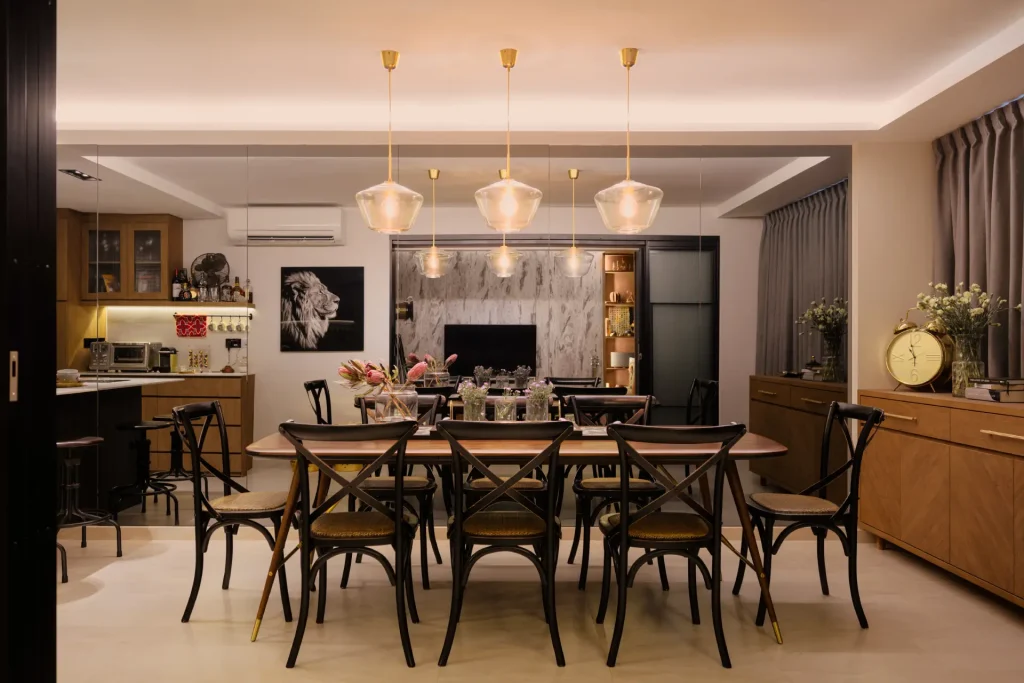
Notice how clean and elegant this home looks. From the ceiling light to the neutral palette, every detail is well-balanced.
Our Tips on Choosing the Best Interior Design Styles for HDBs
For small HDB flats:
- Scandinavian
- Japandi
For young couples:
- Modern minimalist
In case of large flats:
- Contemporary luxury
For bold personality homes:
- Industrial
How Renovation Budget Affects Design Style
The cost of an actual renovation depends on the design style, flat size, and scope. Here’s a realistic overview of Singapore renovations based on current market ranges:
| Style | Typical Renovation Cost |
| Scandinavian | $30k–$55k |
| Modern Minimalist | $35k–$60k |
| Japandi | $40k–$70k |
| Industrial | $45k–$80k |
| Modern Classic | $55k–$90k |
| Contemporary Luxury | $60k–$100k+ |
At the end of the day, your design style will depend on your budget. You can always pick a style that suits your budget to avoid breaking the bank.

How Your Lifestyle Should Influence Your Design Choice
Funny how only experiences teach you that your lifestyle should influence your home interior.
Before committing to any design style, ask yourself honestly:
Do you cook daily?
If yes:
- Prioritise kitchen storage and durable surfaces.
Do you work from home?
- Invest in a proper workspace design, not a temporary desk corner
Do you host guests often?
- Design seating areas carefully.
Your design should and must support your lifestyle. Don’t fight it!
Why Scandinavian Style Remains the Safest Choice
In Singapore, Scandinavian design remains the most functional style for most homeowners.
This is because it balances:
- Cost
- Beauty
- Storage
- Resale value
This is why many of this Mood Board’s clients choose Scandinavian. It ages well, even after 10 years.
The Reality Most Homeowners Discover Too Late
Scrolling through Pinterest or Instagram to get HDB interior design ideas Singapore will show you how beautiful your home can look, but what people fail to realise is that pictures alone don’t show you:
- The lack of storage
- The maintenance required
- The daily wear and tear
- The cost behind the look
I’ve seen where homeowners spend $50,000 just to chase a Pinterest “look” and then regret it within three months of living in that dream.
On the flip side, I’ve also seen simple, well-planned and constructed homes look expensive for years. Your choice can either save you or cost you a lot of money.
Common Mistakes When Choosing HDB Design Style
One common mistake homeowners make when choosing an HDB design style is underestimating storage. This is especially true for minimalist and industrial styles. Minimalist homes look clean in photos because things are hidden.
So if you don’t build enough concealed storage from the start, the entire aesthetic collapses.
How to Choose the Right Designer
A good designer doesn’t just show you pictures. They will start by asking the right questions.
They ask:
- How do you live?
- What frustrates you about your current home?
- What do you need more of: storage, light, or flexibility?
Conclusion
Choosing the right interior design style isn’t about impressing guests for the first three months. It’s about creating a space you won’t feel tired of in three years. Go for:
- Practical over trendy designs.
- Timeless over flashy.
- Comfort over aesthetic hype.
Take your time when choosing because fixing mistakes later is expensive. But choosing right from the beginning saves money, stress, and regret.
Frequently Asked Questions (FAQ)
1. What is the most popular interior design style for HDB flats in Singapore?
Scandinavian style remains the most popular choice for Singapore homeowners. It balances affordability, functionality, and timeless appeal. Many homeowners choose Scandinavian style because it ages well and supports good resale value.
2. Which interior design style is best for small HDB flats?
For smaller HDBs, Scandinavian and Japandi styles are the best options. These styles use bright colours, minimal clutter, and efficient storage to naturally make the space feel larger and more open.
3. How do I choose the right interior design style for my lifestyle?
Start by considering your daily habits. If you cook often, invest in kitchen storage. For a work-from-home environment, include a proper workspace. If you have children, choose durable materials, more storage, and easy maintenance. The right design style supports how you live your daily life, not just what looks good in photos.
4. Does interior design style affect renovation cost?
Yes, it does. Some interior design styles are significantly cheaper because they use simple materials and less carpentry work. Examples include minimalist and Scandinavian styles. Luxury and Modern Classic styles cost more due to custom carpentry, premium finishes, and more detailed design work.