The Art of Balance: 5 Interior Design Ideas for Creating Calm, Wellness-Centred Interiors With a Modern–Traditional Blend

A Designer’s Remedy for Overwhelmed Living
We are living in a strange era, one where technology keeps propelling us forward, while our hearts keep reaching backwards. We crave efficiency, minimalism, and innovation… yet we also long for comfort, memory, and a sense of home the way it used to feel. Most interiors today seem to push us into one direction or the other: ultra-modern spaces that feel polished but emotionally empty, or deeply traditional rooms that feel sentimental yet visually heavy.

The Modern–Traditional Blend is not about trend-juggling. It’s not about placing a mid-century lamp beside your grandmother’s trunk and calling it “eclectic.” True fusion design is nervous-system design, a mindful approach to interiors that lowers sensory stress and brings your emotional world back into balance. When done with intention, a space can feel both rooted in memory and clear enough for the mind to breathe.
This guide is about creating spaces that support you. Spaces that calm, nurture, ground, and emotionally hold you.
Let’s explore how to design a home that does exactly that.
1. The Psychology of Comfort: How Fusion Eases “Design Stress.”
You know that feeling when you walk into a room and just… tense up or instantly relax, even before you notice the furniture? That’s because interiors speak to us quietly, long before our brains do.
Hyper-modern interiors like glass, high gloss, and sharp lines can feel efficient, but they lack emotional softness. Their sleekness can come across as cold, even isolating. On the other end of the spectrum, full traditional décor, with ornate detailing, heavy drapery, and dark wood everywhere, can overwhelm the eyes and mind, creating a sense of visual suffocation.
At times, we walk into a hyper-modern room and admire it instantly, yet the body doesn’t relax. We love the look, but not the feeling. And when we step into a very traditional room, the nostalgia is comforting at first, but after a few minutes, our senses start fighting the heaviness. It means the nervous system is torn between clarity and comfort, and that’s where the stress begins.
Fusion design softens the extremes.
- Traditional elements give us a sense of lineage and emotional history. They make us feel safe, connected, and held like we belong somewhere bigger than ourselves.
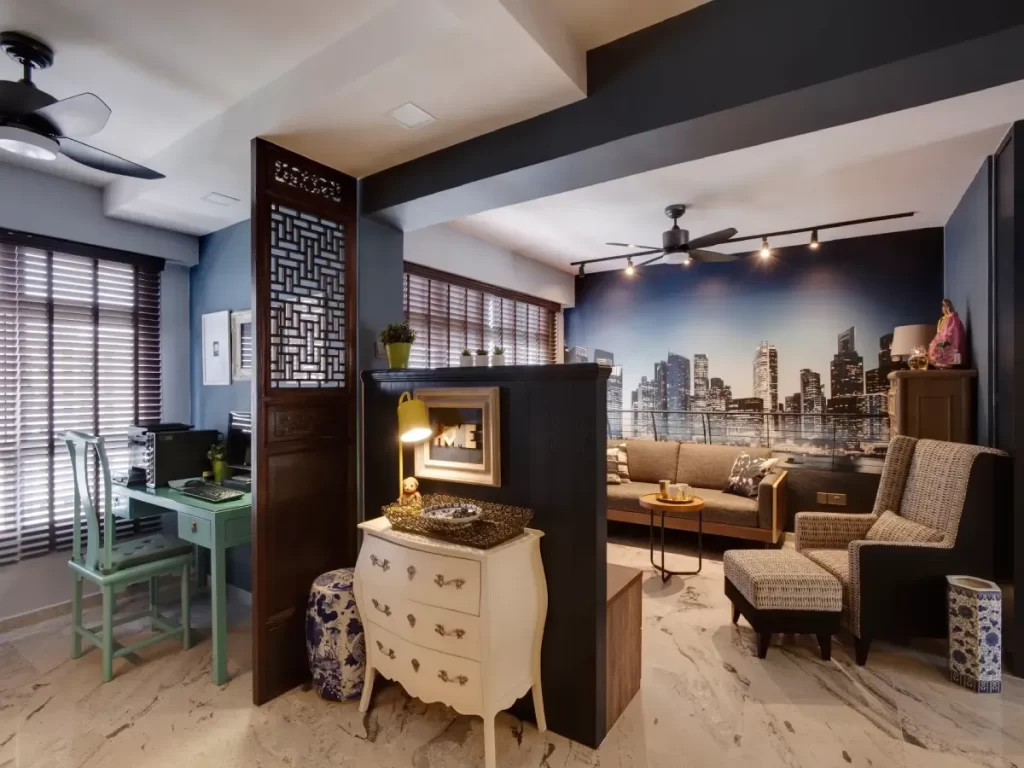
- Modern elements allow the brain to rest. Open spaces, clean silhouettes, and simplicity help filter visual noise.
A truly balanced home communicates both messages simultaneously:
“You are safe here.”
“You can breathe here.”

When emotional grounding, the warmth of the past meets mental clarity, the calm of the present, the home becomes a sanctuary that supports your wellbeing instead of competing for your attention.
2. Palette with Purpose: Using Colour to Regulate the Room’s Emotional Temperature
Colour can be used not just for decoration, but to create a comforting atmosphere. It sets the emotional temperature of a home.
Many of us were taught to chase “brightness” and, as a result, default to pure, stark white. But white can be harsh. It bounces light aggressively, sharpens shadows, and increases visual tension. For wellness-centered interiors, the goal is soft, not bright.
The Modern-Traditional Fusion palette begins with toned-down neutrals and textured finishes and colours that warm the space without overwhelming it.
You can consider grounding tones like:
- Mushroom
- Putty
- Soft slate
- Rich taupe
- Deep charcoal
These colours don’t demand attention; they support it to create an earthly yet uplifting ambience.

And to take it a step further, swap flat paint for limewash or chalk paint. These finishes quietly absorb light rather than reflect it, creating gentle depth and softness that the brain reads as calming.
Consider the simple layering formula below to keep the colours balanced:
| Percentage | Purpose | Examples |
| 50% | Neutral grounding base | Wall colour + major surfaces |
| 30% | Traditional warmth | Walnut, aged leather, antique wood |
| 20% | Muted modern accents | Dusty rose, moss green |
And just as important as what to include is what to avoid:
- High-gloss surfaces
- Primary colours
- Harsh black-and-white contrasts
These visuals spike mental activity and disrupt the calm we’re trying to create.
Shape Language: Curves and Lines in Conversation
Shapes speak to the subconscious, long before we realize what we’re looking at. A harmonious home isn’t only about colour and furniture selection, but how form is used to signal emotion.
Curves For Emotional Softening
Curved shapes bring safety. They feel gentle, nurturing, and enveloping, which is why they should appear where rest happens most, like in the living room and the bedroom. You can opt for a variety of curved furniture pieces, such as:
- Rounded armchairs
- Arched openings
- Circular dining tables
- Curved headboards
Curves quietly say, “Slow down. Settle in.” And this is the vibe we are aiming for.

Lines For Mental Organization
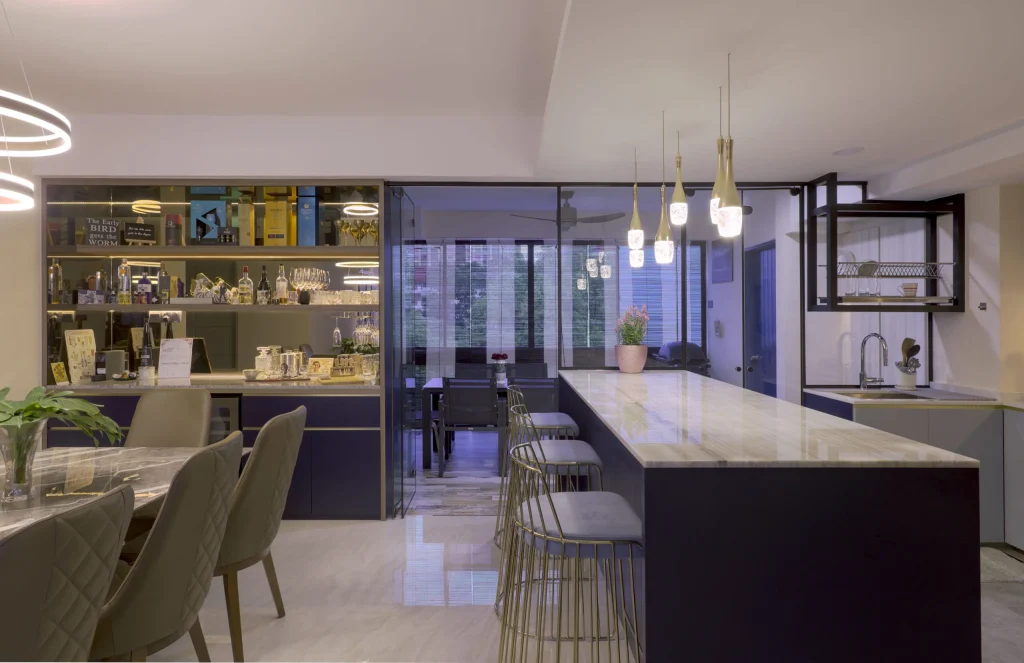
Straight, clean lines give direction. They create clarity, efficiency, and a sense of order, making them perfect for areas of activity, like the kitchen and dining spaces. Opt for lines in furniture with:
- Streamlined cabinetry
- Floating shelves
- Linear sofas
- Rectangular tables
Lines quietly say, “Everything has a place.”
Material Storytelling
Traditional-Modern fusion interiors feel most supportive when materials express texture and history. You can choose from the following textures and materials to create a balance in such fusion:
- Natural stone
- Heavy linen
- Aged leather
- Hand-thrown ceramics
- Carved or imperfect wood
Avoid synthetic perfection, ultra-smooth, factory-finished surfaces, as they often strip away warmth and make a space feel emotionally flat.
4. The Meaningful Edit: How to Display Heirlooms Without Creating Clutter
Heirlooms are powerful because they anchor us to memory and take us back to memorable times experienced. But when displayed haphazardly, they can become visual noise. Sentimental objects should feel honoured, not stored in plain sight.
Consider the two principles to keep heirlooms soulful instead of overwhelming:
1) The Focus Rule
There should be no more than three highly detailed traditional pieces in the same direct sightline. Space around an object is part of its beauty.

2) Modern Minimalism as Display
Use modern structures to elevate traditional items, such as:
- A floating shelf for a carved wooden box
- A matte-black display frame for antique lace
- A simple console table for a vintage brass lamp
Modern restraint makes traditional detail shine. You can also get inspiration from a designer’s favourite trick, which is to build a gallery wall of antique prints or old oil portraits, but frame them in ultra-simple matte black or pale wood frames.
The effect: the content stays nostalgic, the presentation feels current, and the wall becomes art rather than clutter.
5. Real-World Application: A Calm-Fusion Blueprint for Every Room
Now let’s translate the philosophy into real, livable rooms.
One thing we have learned over the years is that every home has a “heart room”, the place where people naturally gather without thinking about it. For some it’s the living room, for others it’s the dining table, and occasionally, it’s the kitchen island where everyone ends up talking, snacking, and laughing. Paying attention to those natural instincts makes design more intuitive and less forced.
The Living Room — Conversation & Comfort
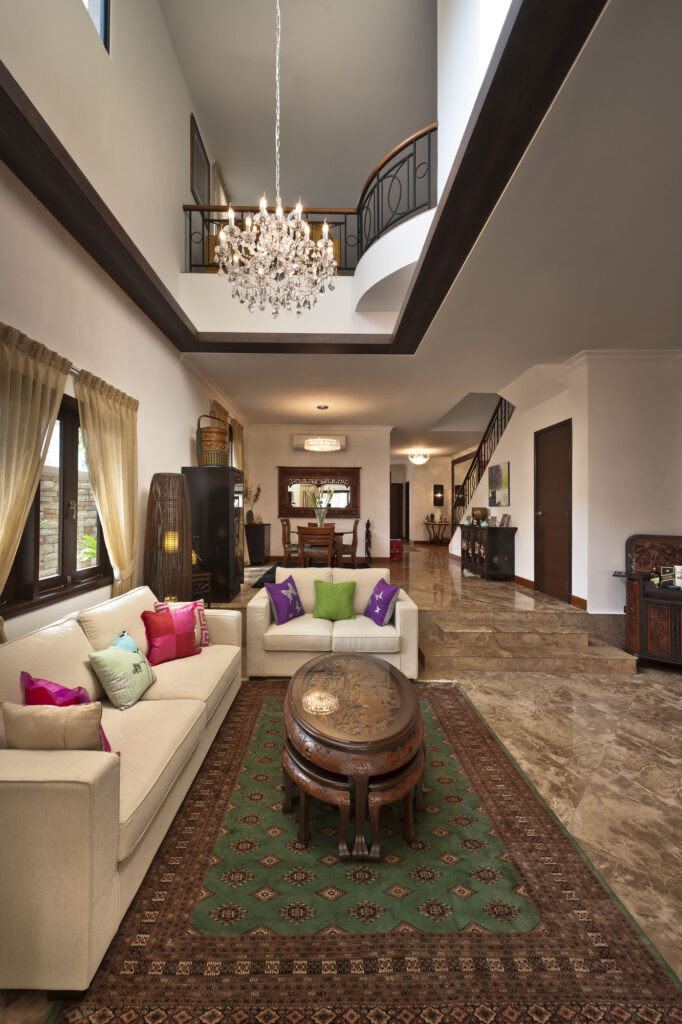
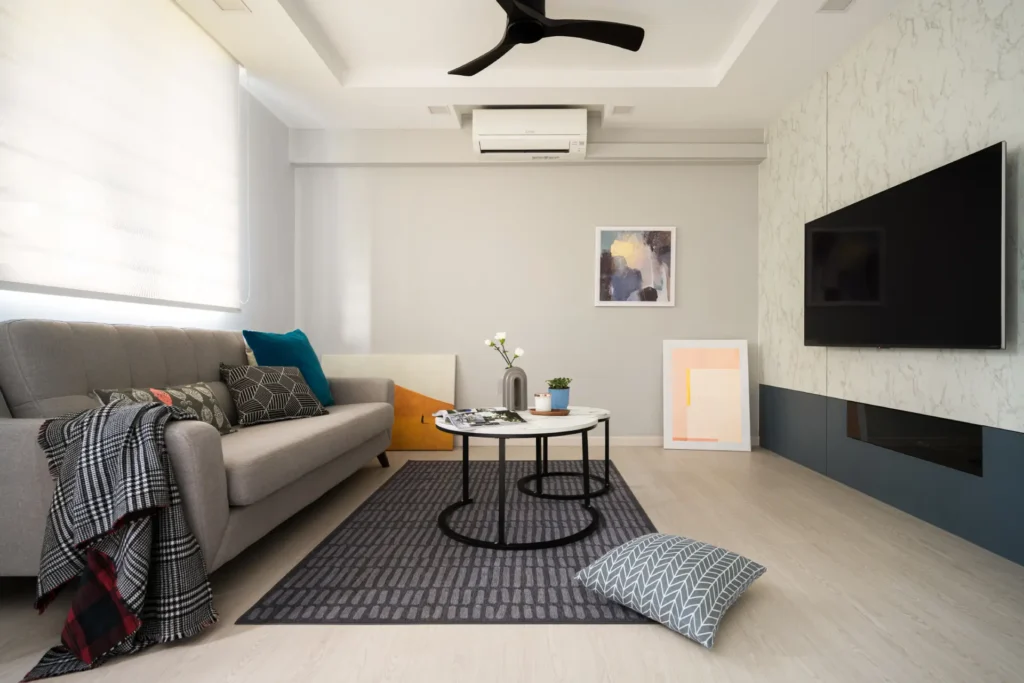
Begin with a large, low-profile linen sofa, a clean, modern foundation that provides visual rest. Anchor it with a faded Persian or Oriental rug to add depth, warmth, and a sense of history. Let the room speak in textures rather than accessories.
The Bedroom — Rest & Retreat
Start with crisp white cotton or linen bedding for freshness and clarity, then introduce weight through a velvet or woven headboard. Keep lighting sculptural and simple, this is the one room where visual silence matters most.

The Dining Area — Gathering & Function
Place a long, streamlined dining table at the centre, it keeps the space purposeful. Surround it with mismatched, light-toned traditional chairs for warmth and connection. Display heirloom ceramics in front of minimal cabinetry, the perfect tension of old and new.

Conclusion: Your Home as a Reflection of Your Inner World
A beautifully balanced home doesn’t happen by accident. It’s the result of choosing colours that protect your energy, textures that comfort your senses, and objects that make you feel connected rather than overwhelmed.
When we stop decorating for performance and start curating for emotional grounding, our homes stop being simply the place where life happens, and they become the place that restores us.
A sanctuary.
A soft landing.
A space where the past holds us, and the present gives us peace.
Frequently Asked Questions
What is a modern–traditional fusion interior style?
A modern–traditional fusion interior combines the sleek clarity of modern design with the warmth and emotional grounding of traditional décor. It creates balance by using open spaces, clean lines, and neutral palettes while incorporating heirlooms, natural textures, and timeless craftsmanship.
How do I make my home feel calming without making it look boring?
A calm interior doesn’t have to be bland. Use warm neutrals as the base (mushroom, taupe, soft slate), and layer textures like linen, stone, aged wood, and a vintage rug for depth. Add just a few emotional elements—like an heirloom, old print, or hand-thrown ceramic—to introduce soul.
Can I mix family heirlooms with modern furniture without creating visual clutter?
Yes. Display no more than three detailed traditional items within one sightline so each piece stands out. Combine them with modern framing, floating shelves, matte-black cases, or simple cabinetry to give heirlooms breathing space.
What are the best colours for a wellness-centred interior?
The best colours for a calming, wellness-focused home are warm, desaturated neutrals that soften light and reduce visual intensity: mushroom, putty, soft slate, oatmeal, rich taupe, and deep charcoal. These can be paired with muted accents like dusty rose or moss green. Avoid high-gloss finishes, primary colours, and harsh black-and-white contrasts as they overstimulate the nervous system.